Sally Taylor: Artist of the Month
Artist of the Month January 2026:
Sally Taylor, selected and interviewed by Paul Newman for CBP.
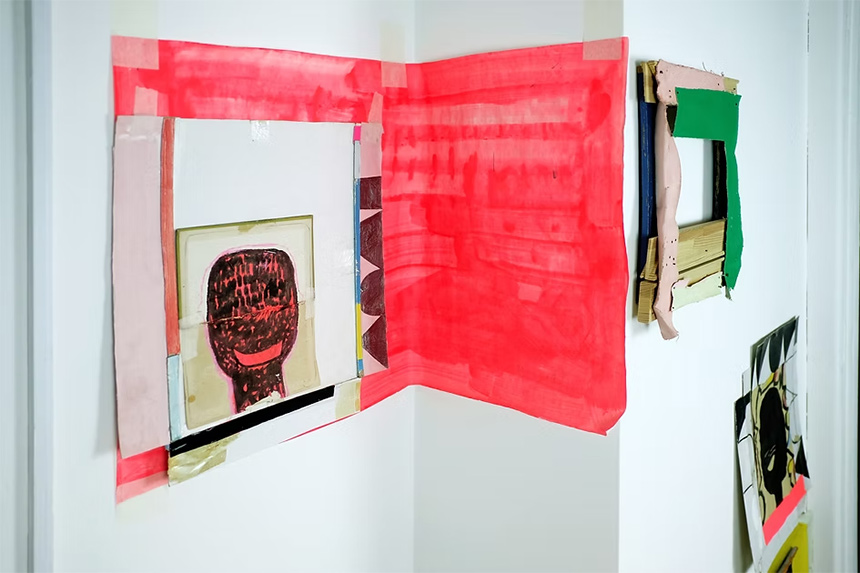
Sally Taylor’s work affirms a desire to understand more about human relationships, specifically her own interaction with others. They are equally about a balance between formal concerns and the communication of emotional resonance. Using found materials enables the superimposition of marks in relation to the personal history of the surface. Materials such as cardboard from old jigsaw boxes are well-worn grounds with tears and imperfections, and the process embraces the awkwardly constructed items they become. Geometric shapes become ‘blockages’ or ‘openings’; the recurring motifs of facial features / ‘smiling mouths’ aim to unravel social constructs surrounding the unsaid / non-verbal interaction.

CBP: Your robustly tactile works on paper and cardboard appear beguilingly reductive and complex. With their dominant use of black I think of Malevich’s early 20th century ‘ultimate’ black geometric abstraction, though your work is clearly more figurative, playful and awkwardly human. It is both accessible though intriguingly elusive. Can you introduce this body of work and its origins?
ST: I have been making semi-abstract works for many years as I always feel a yearning for some presence of the figurative in the form of something bodily (head, mouth, organ etc) as pure abstraction still feels too distant for me. I think it’s an attempt to marry my sense of an abstract mysticism with something rooted in the world and the raw, lived experience of being human. ‘Accessible and elusive’ are good descriptions as I feel that it is my aim to find a bridge between these two ‘worlds’ and to communicate lived experiences of both simultaneously. ‘Awkwardly human’ is appealing too as I feel the works are trying to encapsulate a feeling of vulnerability and alienation, whilst at the same time they are also open and optimistic to the possibilities of being human. So, I think in summary, they are about dichotomies and contrasting/reconciling states of being.
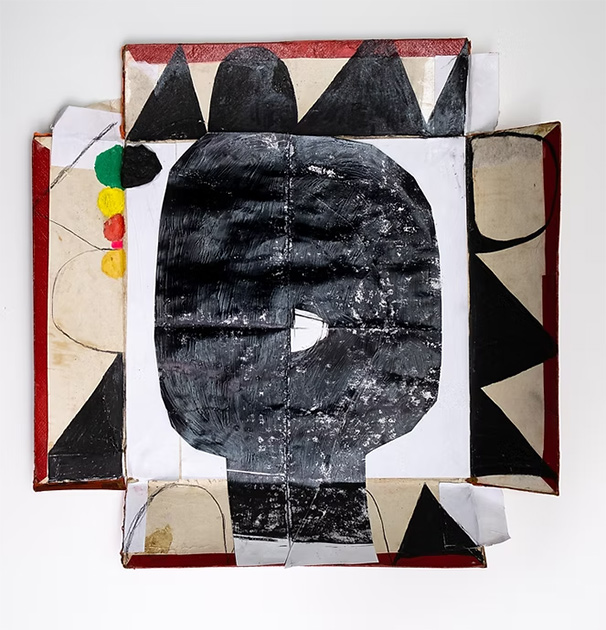
CBP: There is both a playfulness and ominous quality in the distilled depiction of a profile head and smiling mouths. What does the figure represent in your work and can you talk about the economy of its representation?
ST: Playfulness has always been important to me, and the joy of cutting and sticking, mixing paint and applying it to a surface has continued to drive me, echoing my first experiences of making paintings as a child. The physical properties and the seductive nature of moving pigment around a surface continues to be compelling and I put all my efforts into remaining as childlike as possible – turning off my thinking and ‘worldly’, adult ways of processing what I am doing. I know that this processing happens in the deeper recesses of the brain anyway, so I aim to lose myself in the materials. In terms of the ominous, I have often returned to the words of Dubuffet ‘Art must make you laugh a little and make you a little afraid’, and I think these differing emotional states are of interest to me.
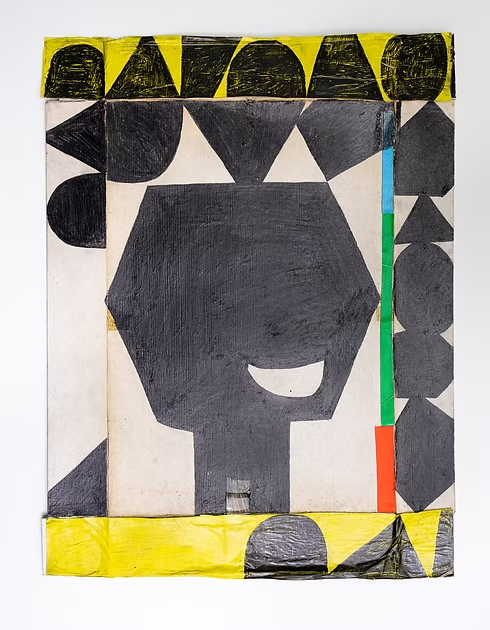
The simplified forms and motifs are an economical way of communicating. This pared back approach means that I have more energy for the rest of the process as the motif is charged with the information I feel I need it to communicate. The smiling mouths have been my way of relaying my lived experiences of presenting myself and observing others presenting themselves publicly, as I aim to unravel forms of this type of communication. I am attempting to strip back the surface layers of this to go deeper in understanding the self, and those of others, rather than superficial layers of social construct. Public speaking has always been a charged and heightened form of communication and has a complex relationship with certain ideals of authenticity. I am interested in how the authentic and the real can be both presented and hidden, revealed and restricted and the perils of navigating this space in a public way both as speaker and audience. Humour and self-deprecation can be ‘used’ as much as earnestness and passion as pure signification. Technology and the collapse of the public and the private forces us to encounter and/or internalise these ambiguities on a daily basis.
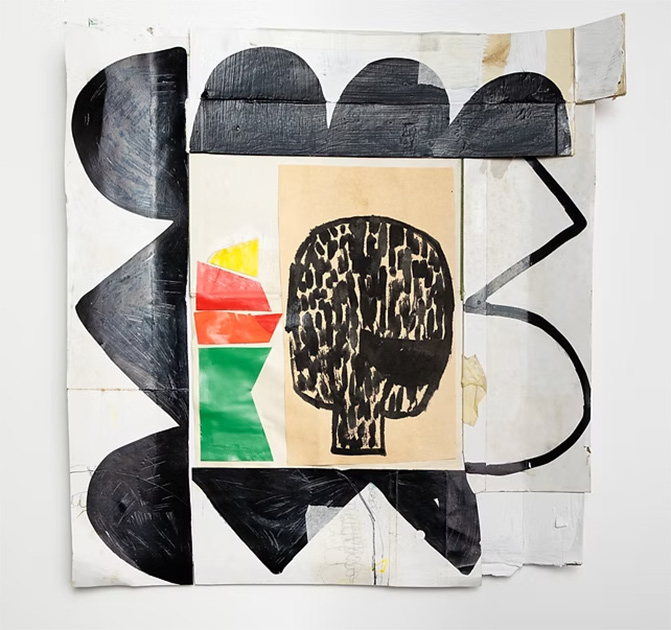
CBP: The border framing around these figure heads consists of fragmented geometric shapes. Can you discuss this compositional device?
ST: The geometric shapes surrounding the motif started to appear, in earnest, around 2018-9. All I can say is that I felt compelled to use them. I think they represent blockages to freedoms, ways of thinking creatively and an artistic life. Conversely, since then the shapes have created pathways through, openings for expression and flow. I have seen these shapes almost behave like pieces in a board game – with players creating blockages or revealing channels. Apertures that could create hope and pathways for positive direction. Games, chance, ritual have always been present in the work and a marriage between a light-heartedness in approach to childlike making, operating alongside an ongoing, serious commitment to art practice. Moving these shapes around a surface is endlessly engaging for me. I have always been interested in constraints, exhausting imagery / or motif and seeking out creative pathways from limitations. I find constraints within the work comforting to some extent as the whole process of making art is exposing and confronting. There’s always trepidation and the constraints offer something to be bound by; a necessity to balance and counter the remaining possibilities.
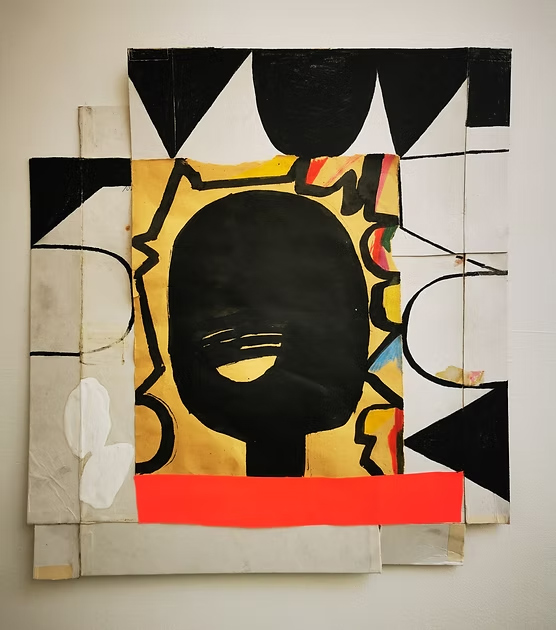
CBP: Can you talk about your predominant use of black, both formally and emotionally in your work?
ST: The work has always had a graphic quality, and the black shapes are painted or drawn with large blocks of graphite, black drawing ink, oil or acrylic. Again, this reminds me of the compulsion to draw as a child; to cover a surface edge to edge or to communicate with simple shapes or motifs. The shapes can be seen as emotional blockages or blocks created by others in the form of communication. However, the shapes then jostle and sometimes part or meet – to me this represents the shifts that can occur through honest communication where ego has no part to play.
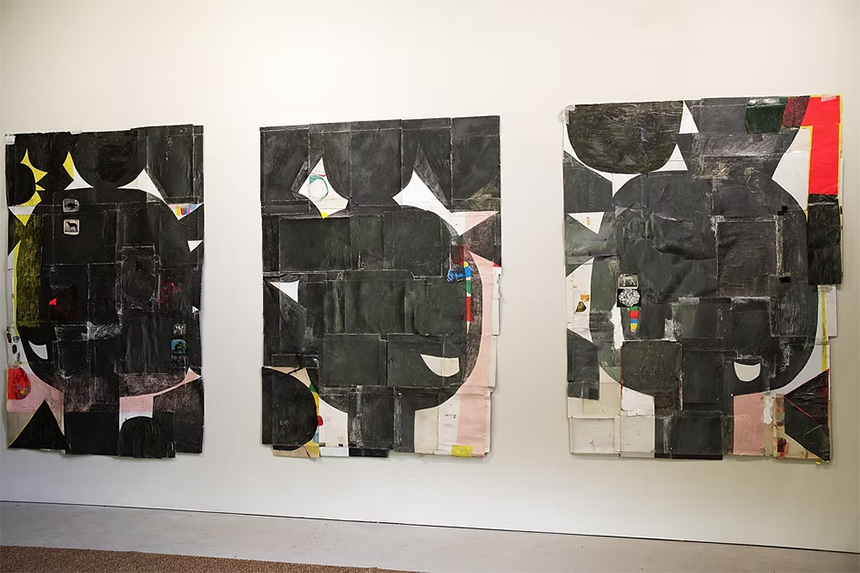
CBP: Your works are assemblages, weathered and tactile from collaging and painting on found discarded paper and card surfaces. It feels like an extension on ‘Synthetic Cubism’. Can you discuss the process and construction of collaged, fragile and irregular supports as a catalyst for your work?
ST: Yes, I have been using unravelled and deconstructed boxes, cardboard and book covers for several years now. I enjoy the three-dimensional quality they have even when they have been flattened, and I then construct grounds from these using fragments and various pieces glued back together. This process is playful and childlike and helps to ease me into working with a certain comfort knowing that these grounds or supports contain the evidence of use and social exchange (many are jigsaw / games boxes from charity shops or carboot sales), they are often smeared and stained and have had a previous life with multiple incarnations before becoming my possessions. I am interested in the atmospheres imbued energetically within these materials as I then begin to work with them. I am also drawn to them aesthetically as the aged papers have a quality that I immediately respond to – responding intuitively and superimposing my marks and forms on to the surfaces is such an engaging process for me. A tear or stain can be a way in to making a piece of work as there is an immediate mark to respond to which starts a dialogue.
Rauschenberg’s Cardboards from the 1970s have been a continual reference point and his ‘trust in materials’ as a way to find a pathway through.
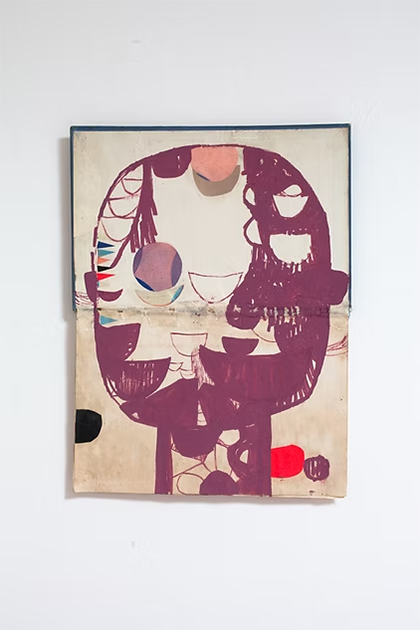
CBP: I started a series of works on new paper in 2024 ‘Fear Terrains’ because I’d been habitually working over existing and abandoned works, that I felt I’d forgot or became fearful of starting an image on a blank white page. I’m not suggesting that your approach is for similar reasons, but can you discuss the resonance of working over existing and found imagery?
ST: Yes, the reasons are very similar! I think the found surfaces are a combination of this fear of something blank and white but also the financial implications of expensive grounds and the pressure that this can create. The found surfaces offer the chance to make works about the social exchange of the material itself as I have already described, but also the opportunity to enjoy the lack of pressure to make something successful with every attempt at a painting. With family life and the ongoing battles many artists have to carve out time to make without financial pressures in the equation too, these found surfaces certainly obliterate some of this, as I have seen how damaging this can be to a practice. My working methods are quite the opposite and I work in a very direct manner that embraces action and decisive activity, avoiding any unnecessary distraction.

CBP: This feels like a very autonomous and instinctive body of work. Can you discuss the influences in your work, painting and cultural?
ST: I work very instinctively and my studio has rarely been a quiet, contemplative place as my children are often alongside me and my dogs and other animals. For me this is fundamental to my process as it doesn’t allow me to wallow in introspection that I feel can be at detriment to the actions taken in the process of working. It also relates to the ideas of Robert Rauschenberg – operating in the gap between art and life.

In addition, it can be a grounding experience requiring a sense of humour both in the work itself and in the processes of its making. Amy Sillman’s words come to mind – ‘the presence of humour, irony, absurdity, always indicates that there is something else there.’ This is not to say that the making process is not full of what’s fraught, but that there are constant bridges between the two which make the process feel heightened and worthwhile.
I make decisions quickly, with force and as much certainty as I can muster – cutting up material quickly and moving colour and form around a surface at speed. This is not to say that a meditative, slow approach is absent as some periods in the process are exactly that, but the majority of the time is spend physically active. I enjoy testing the parameters and constraints of my own physical size against the larger work as many of these are cumbersome and difficult to manoeuvre. Again, this feels like part of the process and reminds me of some previous work that involved cutting up gaffer tape – the awkwardness of this process was frustrating but also energising in terms of pushing through and not being defeated by the characteristics of materials.
In terms of influences, I often return to some of the same practitioners who I have followed for many years including Tal R, Amy Sillman and Louise Bourgeois. There are stand out moments such as seeing Rauschenberg’s ‘Rebus’ and his Combines series in New York twenty years ago. Seeing Dubuffet at Kroller-Muller and Amy Sillman’s ‘the ALL-OVER’ at Camden Arts Centre. I have a long history of visiting Cornwall too, so have an immediate affinity with work made in connection to this location by Ben Nicholson and many others.
Societally, the works are autobiographical and reflect on the human condition more widely as they speak of blockages and openings that occur through the disconnect / connect of human relationships – particularly prevalent at this time of social discordance, division and the alienation many feel from themselves and others with the rapid advancements of digital technologies, and societal norms we have become accustomed to.
CBP: Your work is painting, collage and drawing. Is there is distinction between the elements of your practice in terms of preparatory studies and finished works, or is it a more fluid and organic approach between these processes?
ST: I uphold a very fluid approach. I don’t differentiate at all, and I find that drawing materials, paint and collaged matter make their way into most of the work. Even the large-scale sculptural works I have made (including the Forestry England commission in Dalby Forest, North Yorkshire) have always begun as small paintings and drawings in the studio.

One of the things I find difficult is not having all of the materials I need around me when I am working – at present I am between studio spaces. The process of making can be so dynamic that I am sometimes running around the studio grabbing materials that I feel compelled to use at any one time and I get frustrated if I can’t locate what I need. It’s like it’s all stored in my mind – years of collecting, gathering and sourcing materials ready to use them when the time is right. This process of collecting and storing materials is also a positive way of knowing that my practice will continue and that there is always new work to come. My practice is one that emerged from always having a studio (no matter how cold and inhospitable) to hold materials and store work to be resurrected at a later date. I worry that the ongoing shifts in society mean that more, and more artists are losing their spaces, and this has a cost in how a practice functions.
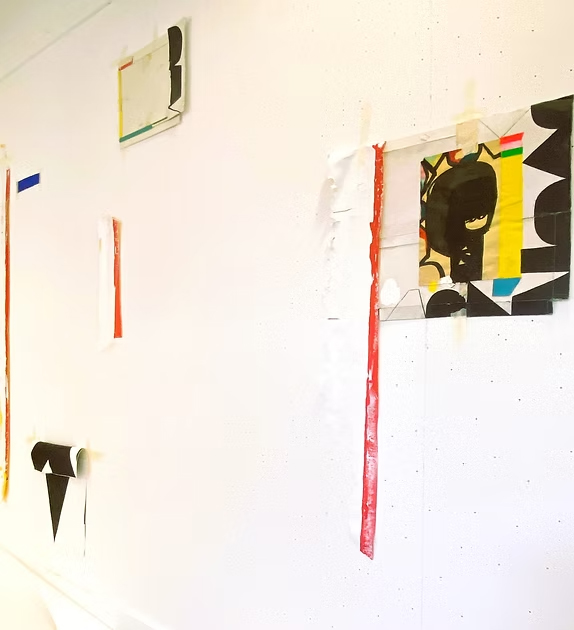
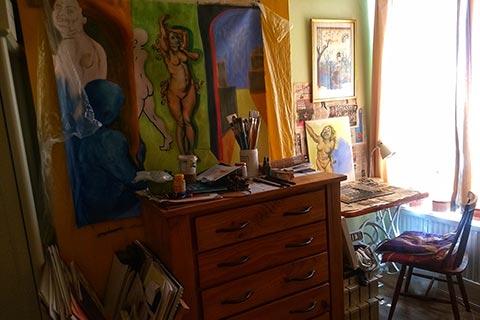
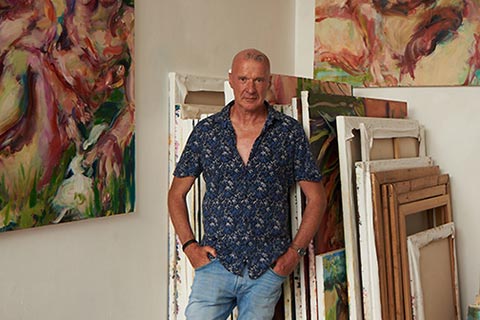
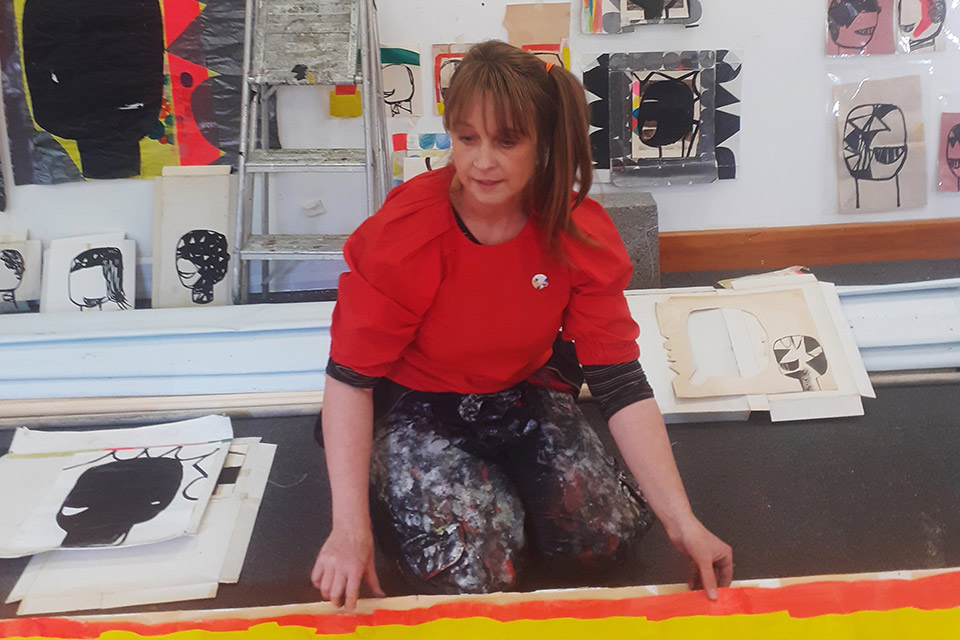
CBP: The image of you in your studio shows a lot of works in development. Can you talk about your studio process and strategies?
ST: I have periods of intense making followed by a more meditative approach of sitting and looking. Then this will lead to another physical and engaged charge at the work to instigate a new direction either by moving something or adding a new form. Working on many works simultaneously has always been my process. Like the found surfaces, this helps me to make many works and avoid overthinking. I am direct and will often grab scissors to cut through materials based on an instinct; this action then leads to the next. My studio walls are the evidence of this action, and they are often covered from floor to ceiling with works in communication with each other. The dialogue between works is essential in remembering visual and conceptual threads. To see work mapped out on the walls before me makes the process less onerous as I feel compelled by what needs to be communicated at each moment.
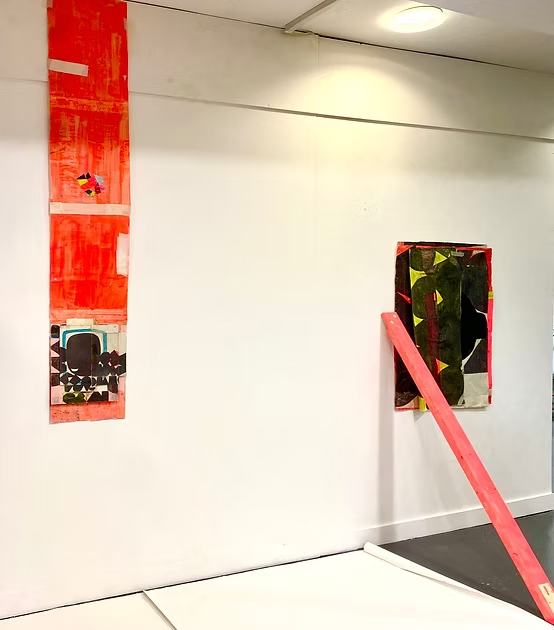
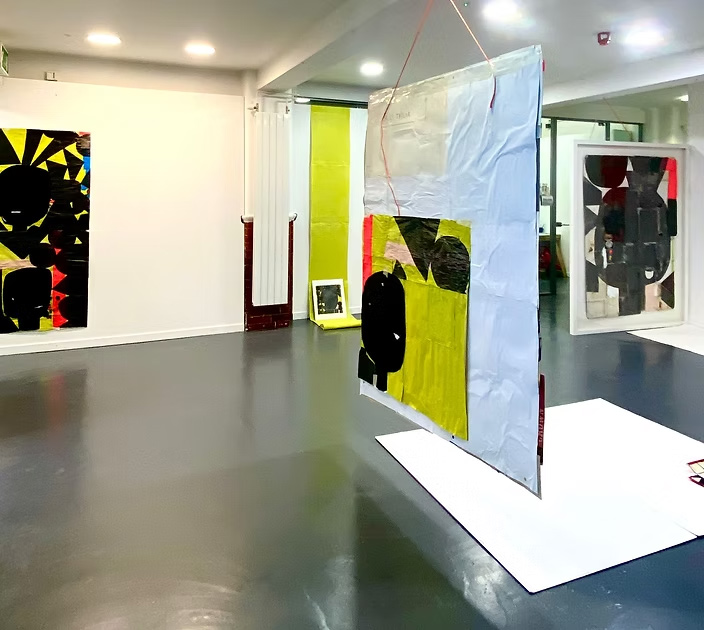
CBP: One of my own research interests is the studio making process and the residue on the periphery of this activity, that can become installation strategy. A key text is Brian Odeherty’s ‘The Studio and Cube: On the Relationship Between Where Art Is Made and Where Art Is Displayed’ 2007. Looking at your installation views, for example, Pet Portraiture it feels that this is an approach you might use?
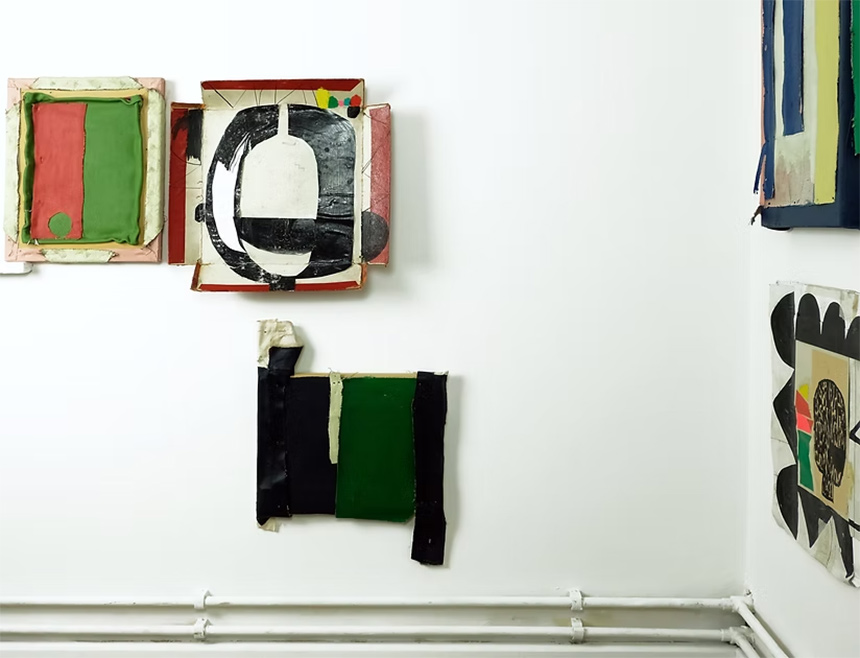
ST: For several years I have been fascinated by recreating my studio in a gallery setting – partly to bring the energy of the studio walls that are full of works jostling for attention, and because I have been keen to keep the work in its raw state. Recent projects have been enthralling in this regard – particularly collaboration with Deb Covell most recently in Vessel at York St John University. Deb was helpful in building my confidence to push this approach to a new level as we built upon the time we had together in residence as we experimented using Richard Serra’s Verb List. In my solo show that followed, titled ‘Opener’, we explored ideas of exhibiting framed and unframed works in unison, creating ‘walls’ with very large, framed works that behaved like expanded paintings. This also enabled me to elevate small-scale peripheral works, alongside large-scale highly worked paintings and drawings to create assemblages and installations directly echoing what happens in my methodologies of making in the studio. The possibilities were overwhelming but enlivening and made the works feel less constrained by remaining as one iteration only. With this approach many formations become possible which enabled the work to feel like it was continuously reforming and re-emerging.
Sally Taylor (b. 1977, Bury, Lancashire) Lives and works in North Yorkshire.
Selected exhibitions include: Head Blocker, ArtShed Glaisdale (2023); Champs Noir, Terrace Gallery, London (2023); Trinity Buoy Wharf Drawing Prize 2022, London and UK tour (2022-3); Dalby Forest Residency, Large scale works supported by the Forestry Commission, Dalby Forest, North Yorkshire (2021); The Far Away Nearby, Rabley Gallery, Wiltshire (2020); Fully Awake 5.6, Freelands Foundation, London (2019); Some Spaces Left, Platform A, Middlesbrough (2018); Ink Art Fair Miami, Rabley Contemporary (2016-18).
She has been nominated for the Trinity Buoy Wharf Drawing Prize on seven occasions and was a prize-winner in 2014.
Her work is held in collections across the USA and Europe.
She is Senior Lecturer in Fine Art at York St John University. Co-Director of AHH Studio Collective, North Yorkshire (affordable artist studio provision, project space and residency programme).
https://www.sallytaylor.net
Instagram: @_sallytaylor_