Of Bodies New and Strange
‘Of Bodies New and Strange’
This is from a recent talk given for Turps Margate at Turner Contemporary in which I discuss metamorphosis in my painting of human figures.
Susie Hamilton
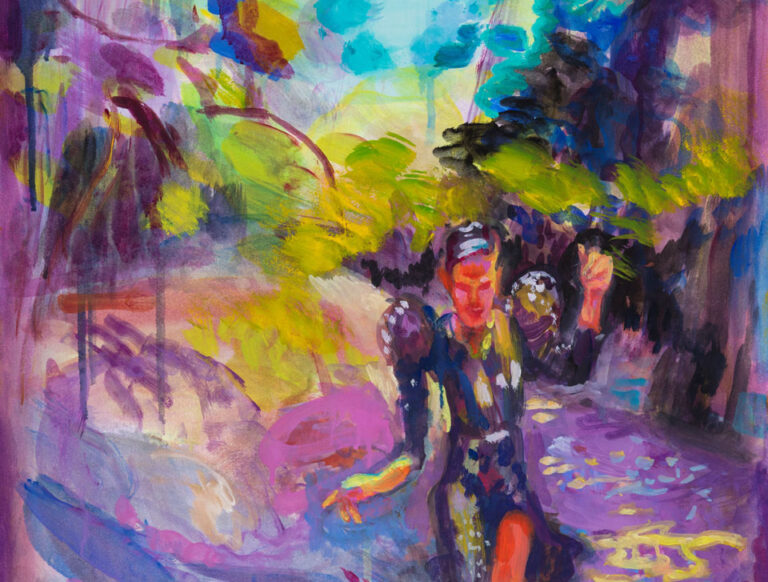
I often paint solitary people in desolate environments yet push this bleak but ordinary world towards something unfamiliar and uncanny. My figures morph into other beings or inhabit spaces where other realities intrude. Transformation is therefore a key part of my painting, hence my essay title from the prologue to Ovid’s ‘Metamorphoses’.
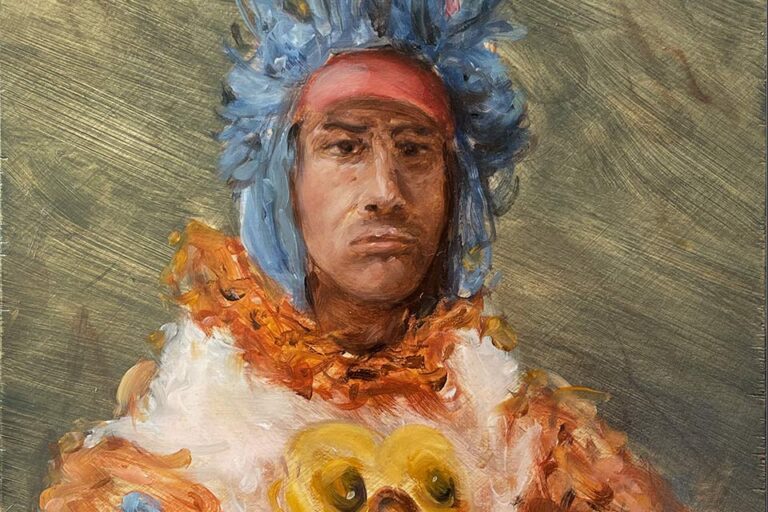
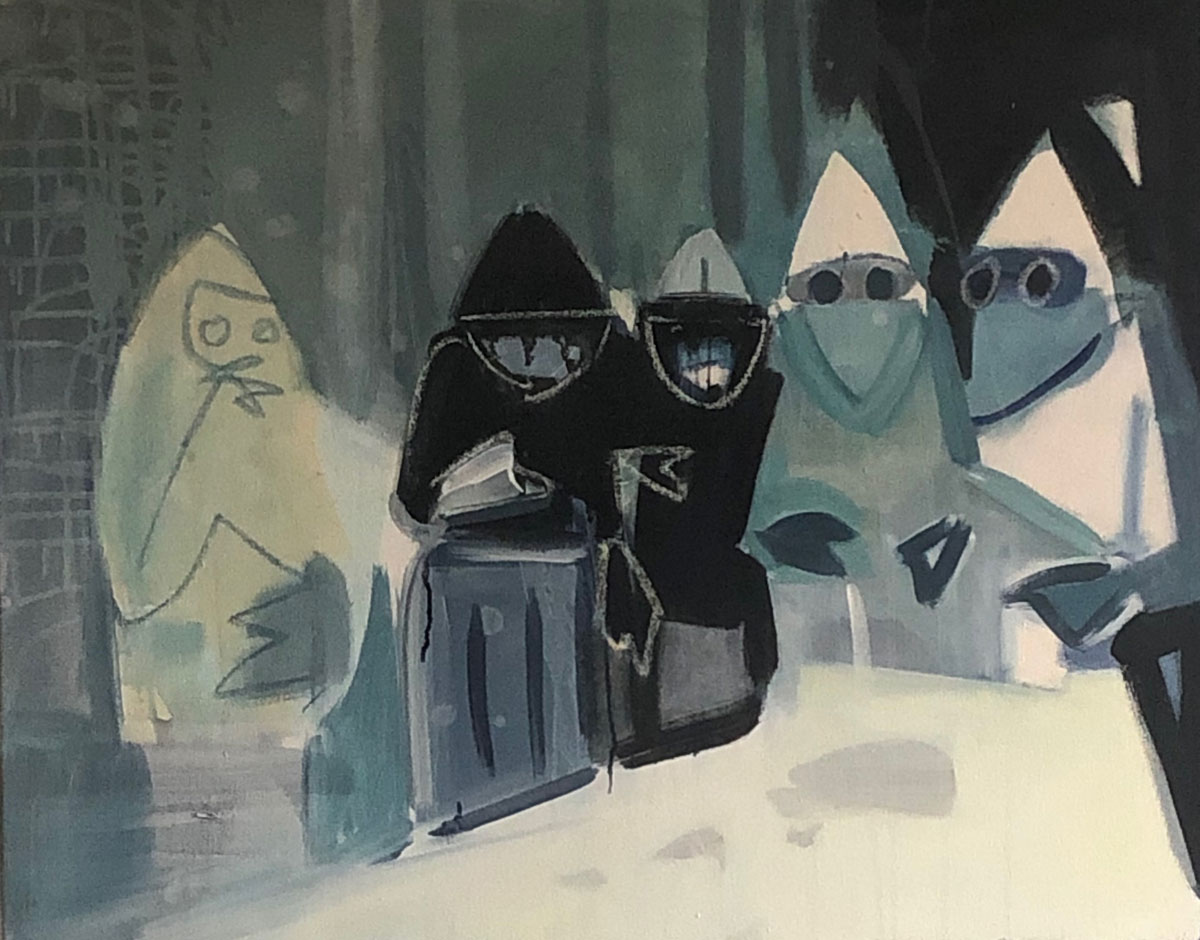
A fascination with metamorphosis has been with me since childhood when I was scared of people in sunglasses or hats. It is a theme to which I’m continually drawn in literature, in Ovid, Dante, Andrew Marvell, Kafka, TS Eliot, and it was the subject of my thesis on Shakespeare. I’ve always responded to it in visual art and its been part of my own work since the 1990s when I took part in the project, Cab Gallery, in which artists showed work in the back of a London taxi. My contribution to this mobile exhibition was a book of figure drawings made as the taxi drove me around the city, and because I was working so quickly, abbreviation and mutation were inevitable. Passersby ended up with arms like spikes, hands like hooks or were fused together in one shape. They seemed extra fragile, comical, frightening or grotesque, an effect I developed when back in the studio so that figures in my paintings started to morph into something other. They became monsters, ghosts, yetis, or figures made strange with hoods, masks, helmets or festival costumes.
So, metamorphosis in my work can be man or woman turned into yeti or ape or masquerader. One type of creature is changed into another. But it can also mean a figure eclipsed, shattered or dissolved as, for example, light bursts upon it. In my paintings such as ‘Riddled with Light’ or ‘Scorching Beams’, veils of brightness mask or splinter the figures. Or in my ‘Mutilates’, a name I invented to mean both mutation and mutilation, something similar is happening from within as if they are x-rays. These paintings of semi-translucent beings on black grounds are built up in layers of watery white acrylic that I tip, tilt and blow to suggest the insides of the body. The paint floods over contours indicating collapse, and not just physical but psychological collapse, since the two are closely related. And this kind of meltdown has been a constant in my paintings of figures like ‘Shoppers’, ‘Travelling Groups’ and especially ‘Diners’ who are embarrassingly morphing in the middle of corporate events. They are going to pieces in the presence of each other. TS Eliot’s poems are a source here, especially poetry of social unease like ‘The Love Song of J Alfred Prufrock’ where tongue-tied Prufrock muses that “I should have been a pair of ragged claws/Scuttling across the floors of silent seas”. This image of the civilised J Alfred becoming a crab or lobster is one I particularly like and my dining rooms show executives and captains of industry mutating, if not into shellfish, into distorted forms. The formal structure of white tablecloths is set against dysfunctional shapes or even molecular drops as if people are reverting to a kind of biomorphic soup—an embarrassing state of affairs at a high-end gathering. Then I painted similarly embarrassing mutations in my processions of dignitaries falling apart at state occasions. I made them for ‘Queen and Country’, devised by the Art Car Boot Fair a few years ago, and they include bishops, mayors, judges and royalty leaking and squirting amid the splendour of pomp and ceremony. The quote from Shakespeare’s ‘Henry V’, ‘O Ceremony show me but thy worth’ was an inspiration but even more so was the concept of the abject. Unruly bodies are erupting beneath robes and regalia as if these grandiose figures are in fact studies in abjection, a topic to which I’m constantly returning.
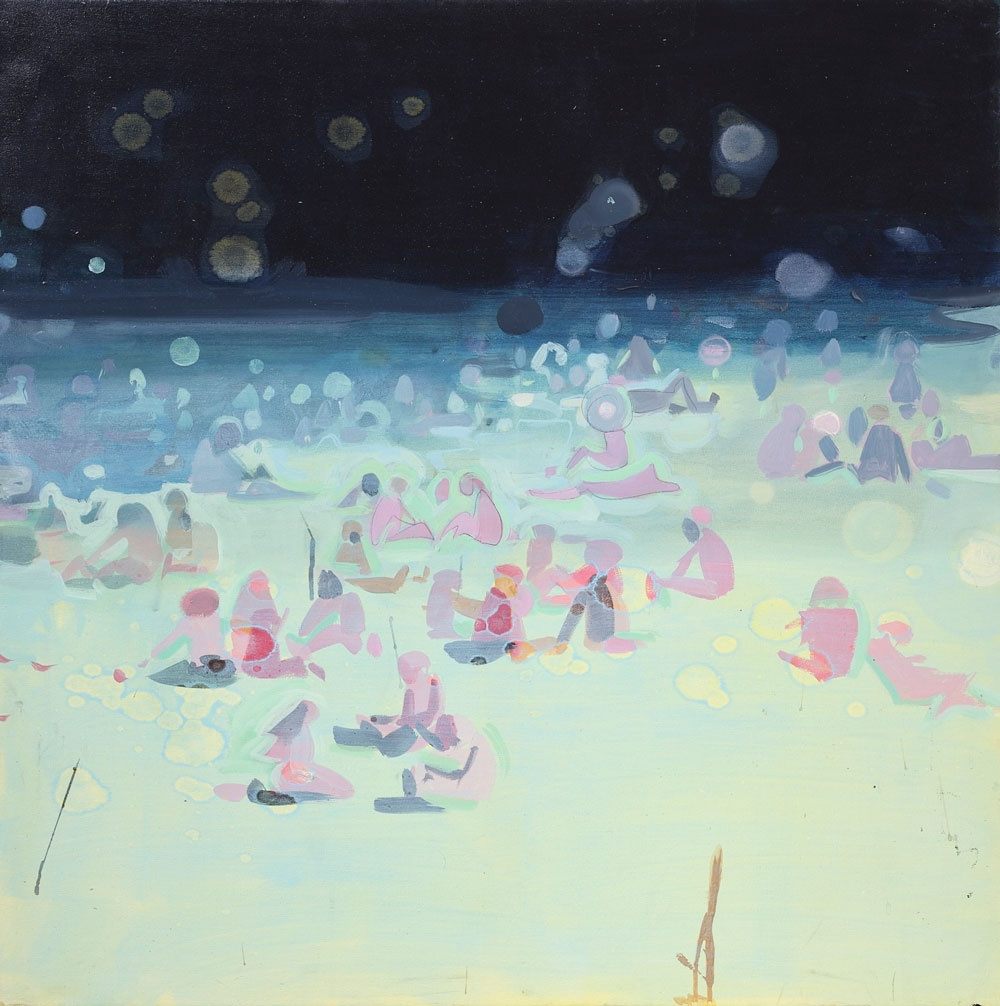
Ideas about abjection have been explored in film, philosophy, literature and psychoanalysis, notably by philosopher and analyst Julia Kristeva in her book ‘Powers of Horror’. Here she writes about a child’s need to abject the maternal body in order to enter the adult world of language and society. The child must separate itself from the mother who is seen as primitive and chaotic. And so, abject par excellence, icons of abjection, are my big women called ‘Plumpers’, inspired partly by Kristeva, partly by sunbathers I saw on Berck-Plage in northern France and also by many misogynistic lines in literature, in Shakespeare, Baudelaire, Sartre, Marvell, Spenser, Eliot, Swift and not forgetting early Christian thinkers who blame women for all that has gone wrong since Eve gave Adam the apple. For example the 2nd century theologian Tertullian allegedly said that ‘woman is a temple built over a sewer’ and Thomas Aquinas, anticipating Freudian castration anxiety, said that ‘woman is a mutilated man’.
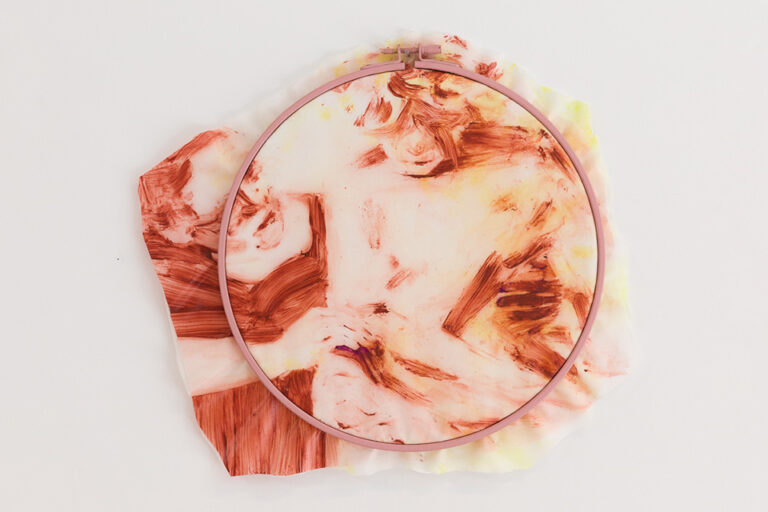
These quotes used to upset me and after brooding on them for years I started to make work coloured by them. In 2005 I came across a magazine called ‘Plumpers’ and I based a lot of paintings on its images, changing their seductive figures into women who seemed isolated and marooned. I gave them unwieldy, disorderly bodies with paint running and spilling everywhere a bit like the woman in the body-horror film, ‘The Substance’. However, as I painted them they seemed less gross, less abject and more assertive. My pictures began to relate not so much to Kristeva as to Barbara Creed’s book ‘The Monstrous Feminine’, in which the abjected woman takes revenge on her oppressors. And while Creed sees her women as triumphantly monstrous, becoming witches, wolves and vampires, my ‘Plumpers’ referenced monumental goddesses from classical or Celtic myth, for example the Callieach, associated with raw energy and the creation of landscape, or Brigid, Irish goddess of fertility. And my revised view of these Plumpers was not just because I upgraded them as deities, but because the style with which I painted them suggested liberation and ebullience. Their spreading flesh and fluids seemed ecstatic, bacchanalian. Their disorder, as in Twombly’s ‘Bacchanalia’ paintings, suggested a joyful bursting out of restraint and they were exhibited by my gallerist Paul Stolper under the title ‘Ecstasy’. They were ‘going outside themselves’, as in the origin of the word ‘ecstasy’, not just because of their postures and expressions but because they were painted in an ‘ecstatic’ way that overflowed contours and boundaries.
And so to the topic of ‘Mess’ which has been part of my work ever since I rejected the exactitude of measuring in the life room at art school. I have a great fondness for poured, spilt, dropped, scribbled, dripped, blown, swiped and smeared paint which has, I think, different intentions and effects in different contexts. It can be festive and elated as in these ‘Plumpers’ or in similar paintings of Carnival revellers or it can stress abjection and ruin as in the ‘Diners’ or ‘Mutilates’. However, in all these different pictures my use of mess signifies mutation and metamorphosis. It smashes limits and destroys established forms in order to expand and reveal new territory. It is creatively destructive reminding me of Roland Barthes’ distinction (in ‘The Pleasure of the Text’) between literary works that offer mere pleasure, ie closure and order, and those that are excessive, fragmented, disruptive and give us “jouissance” or bliss. Paraphrasing Barthes, his text of jouissance discomforts and unsettles the reader in an “infinite opening out” since more is always possible. There can be no closure. Unlike the text that just gives us pleasure, Barthes’ jouissance is eruptive, unstable. And so for me it has parallels with the idea of painterly mess. It suggests liberation and possibility with its riot of defacement.
Messy metamorphosis then is my signature dish and over the last few years I have found new ways in which to explore and exploit it, in my series of work inspired by journeys on the London Tube. My Underground series began in 2023 when I took daily journeys on the District Line and did drawings of figures, distorting them as before through the speed and pressure of working. They became moon-eyed, paper thin or bird-legged and I liked these transformations, the way the passengers became rickety, eccentric or menacing. Their odd shapes, gestures and expressions also reminded me of figures in mythological underworlds, and I began to think about the underground as a metaphor for the underworld, obviously because both are subterranean but also because the underworld is a place where people are changed, whether in poetry, myth or in the psychological underworld of the unconscious.
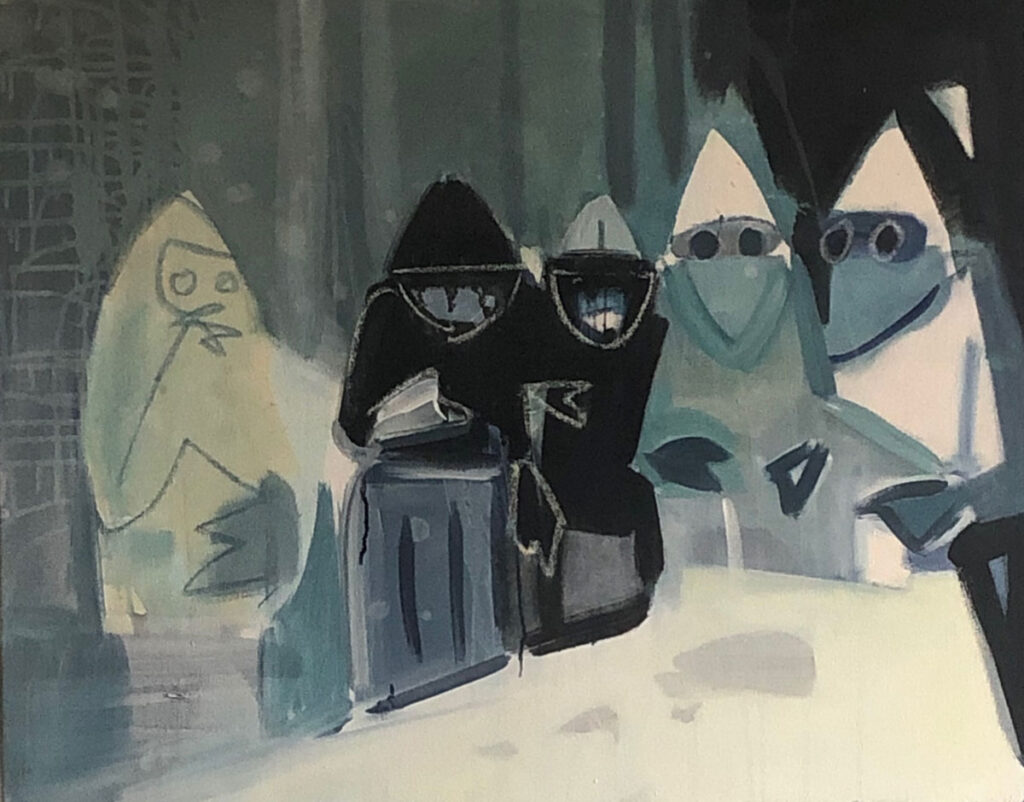
Examples of this include Dante’s ‘Inferno’, Vergil’s ‘Aeneid’, Eliot’s ‘The Waste Land’ and Lewis Carroll’s ‘Alice in Wonderland’. Dante’s thieves are turned into snakes, Vergil’s underworld contains ‘monstrous forms of various beasts’, Eliot’s poem, prefaced by Vergil’s underworld guardian, the Cumean Sibyl, includes disturbing mutations, and Alice, when she falls into Wonderland, grows bigger and smaller. Carroll’s novel is also a dream story and can be interpreted as a descent into the unconscious where again metamorphosis is key. In Freud’s dream interpretation the unconscious transforms, edits and compresses its material. Or Jung, discussing his waking exploration of his alarming mental depths, says ‘I have become a monstrous animal form for which I have exchanged my humanity’.
So the underworld and metamorphosis coincide and my Tube drawings were the basis for figures that became increasingly outlandish as I made them into paintings on cardboard and canvas. They became monstrous and unnerving like figures in literary underworlds but they also morphed from solid figures into fluid ones who were losing their shape. I began painting them on large bits of torn, unstretched canvas (called ‘Rags’) which I tipped and shook so that paint swept across surfaces or ran off in skitters, leaving Pollock-like skeins and patterns of lines and dots. The figures were invaded and disseminated and as in earlier paintings fluid paint suggested people in meltdown. The metamorphic mess represented the body and its emotional states.
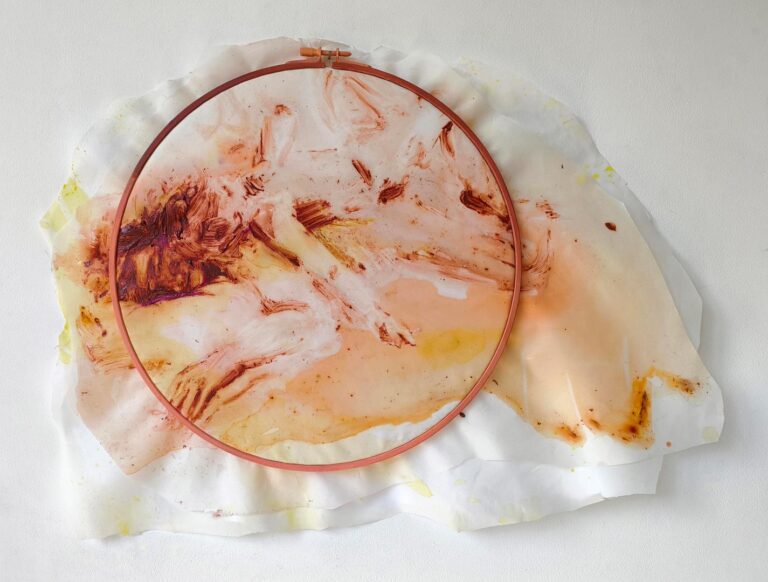
But I also embarked on another kind of metamorphosis in which the mixed media used in the painting refused to submit to representation at all. I began to foreground my materials, allowing them to detach themselves from the image rather than serve depiction. Increasingly I let paint, charcoal, pencil, and pastel assert themselves independently as stuff, undermining bodies and faces with lines, blots and veils, becoming more dominant than the image itself. This was to increase a sense of human fragility, a metaphor for being pulled apart by indifferent forces, as if the physical and material were dethroning the helpless man or woman. The intrusive lines, veils of paint, flung blots, threads of canvas or the printed surface of cardboard packaging, dramatised the tension between a figure trying to come into existence and materials which asserted themselves against it so that human identity was threatened.
Yet I did not always treat my Tube figures so badly. I did not always degrade or attack them because on occasion something different occurred to me as they evolved and as certain shapes evolved with them. I have talked about mess as carnival and mess as defacement but I have also nurtured a third kind of mess which is mess as mystery. By this I mean abstract, enigmatic shapes floating around figures, pushing the named towards the unnameable, the familiar towards the unfamiliar and the recognisable towards what has been called in critical theory, the “unpresentable”.
This expression is from philosopher Jean-Francois Lyotard pondering aspects of existence that exceed representation. They are, he writes, unpresentable, overwhelming but by indicating this impossibility artists and writers can communicate the idea of a beyond that remains unexpressed. Eliot writes that ‘words strain, crack and sometimes break under the burden’, but he exploits their inadequacy through cracked, broken, fragmented poetry in ‘The Waste Land’. He leaves gaps and fissures that indicate what cannot be fully expressed. It is a little like Roland Barthes’ idea of an unstable, disruptive text which can never claim to be complete. And for Lyotard it is not just words that cannot completely capture existence, painting also has to admit to the unpresentable. As with Eliot’s broken poetry, visual art can fruitfully reveal its limitations by not representing, an idea which for Lyotard is embedded in certain kinds of abstraction and minimalism, especially in the work of Barnett Newman about which he has written extensively.
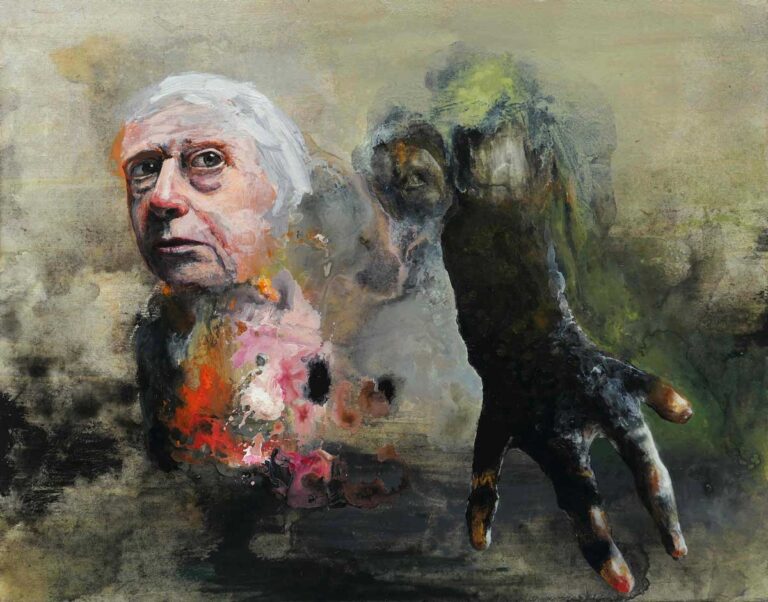
For me the idea of the unpresentable is expressed by paintings in which the nameless contrasts with the named, a nameless ‘thing’ is painted next to a discernible figure, for example the shadowy shapes and splats in Bacon’s ‘Portrait of George Dyer’ or the tangled lines emerging from the naked figure in Kitaj’s ‘The Ohio Gang’. Looking at these smears or tangles, I think ‘what on earth are these? Why are they here?’ The clear and rational falters and collapses into what is outside comprehension. And my attraction to these oddities has inspired me to bring them into my own painting, most recently in the Underground series. The Tube figures are frequently surrounded by nameless floaters and filaments and since these encircle or sprout from the head they suggest mental activity: what lurks beneath consciousness, what escapes language or what could be described as visionary experience.
Mess in collaboration with metamorphosis can therefore be destructive or ebullient or enigmatic but in all these it extends the figure into unsettling territory where the known, familiar and heimlich are challenged and overthrown.