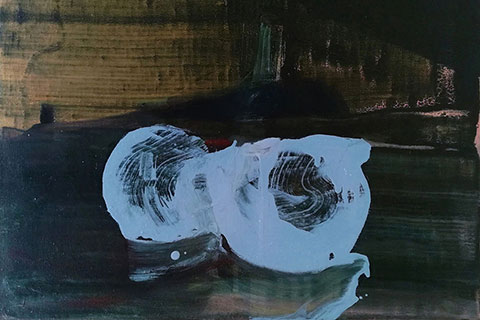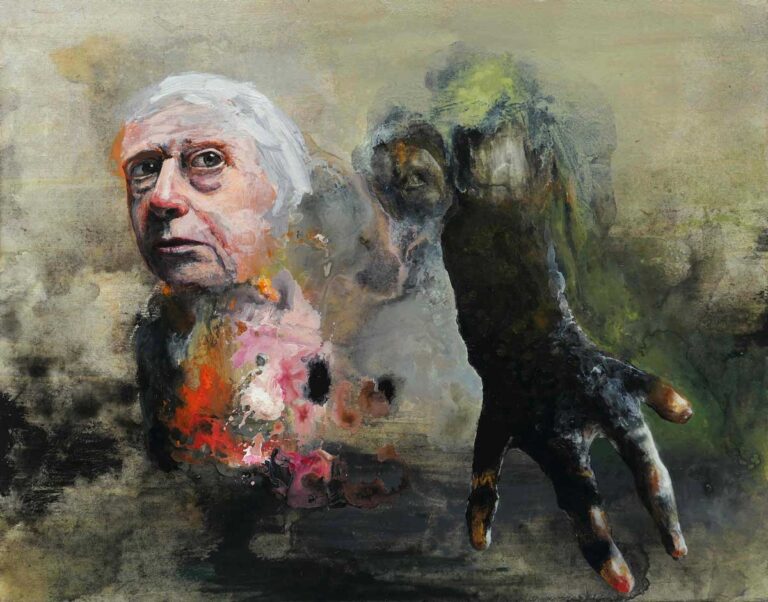
Natalie Dowse: The Fragmented Body
The Fragmented Body
Phil Illingworth traces the themes that connect Natalie Dowse’s practice, and how her engagement with particular imagery, from archival footage and found photographs to film and television, led to her Mise en scène series.
Throughout her career, Natalie Dowse has returned repeatedly to the human body as both subject and metaphor. Whether working from moving image, photography, or found media, her paintings explore the body as something mediated, observed, reminiscent, and transformed. Looking across the breadth of her practice, it becomes apparent that the body – and increasingly the face – forms a continuous thread connecting works made over more than three decades.
Dowse first explored these concerns as a student at Falmouth. Her early work centred on movement, dance, and physical presence. Video, photography, performance, drawing, and painting all became vehicles through which she examined the body in motion. In her final year, she created large charcoal drawings derived from video stills, producing work that involved tracing her own body and physically interacting with drawn surfaces through movement and pigment. Even then, the body was both image and instrument; something represented and something actively engaged in the making of the work.
Although her practice evolved significantly after graduation, these interests never disappeared. During the years following her MA, she worked across installation, sculpture, video, and painting before consciously returning her focus to painting and drawing in the early 2000s. At the same time, she resumed using moving image and photography as source material, establishing a methodology that remains central to her practice today.
What is striking is how often Dowse is drawn to moments when the body becomes vulnerable, exposed, or difficult to read. A key example is her series of paintings based on archival footage of young female Eastern Bloc gymnasts from the 1970s. Rather than depicting the athletes in moments of triumph or physical perfection, Dowse sought out moments between performances: waiting for scores, standing on podiums, receiving medals, or fleeting glimpses of anxiety. These paintings shift attention away from athletic achievement and toward the human cost hidden beneath public spectacle.
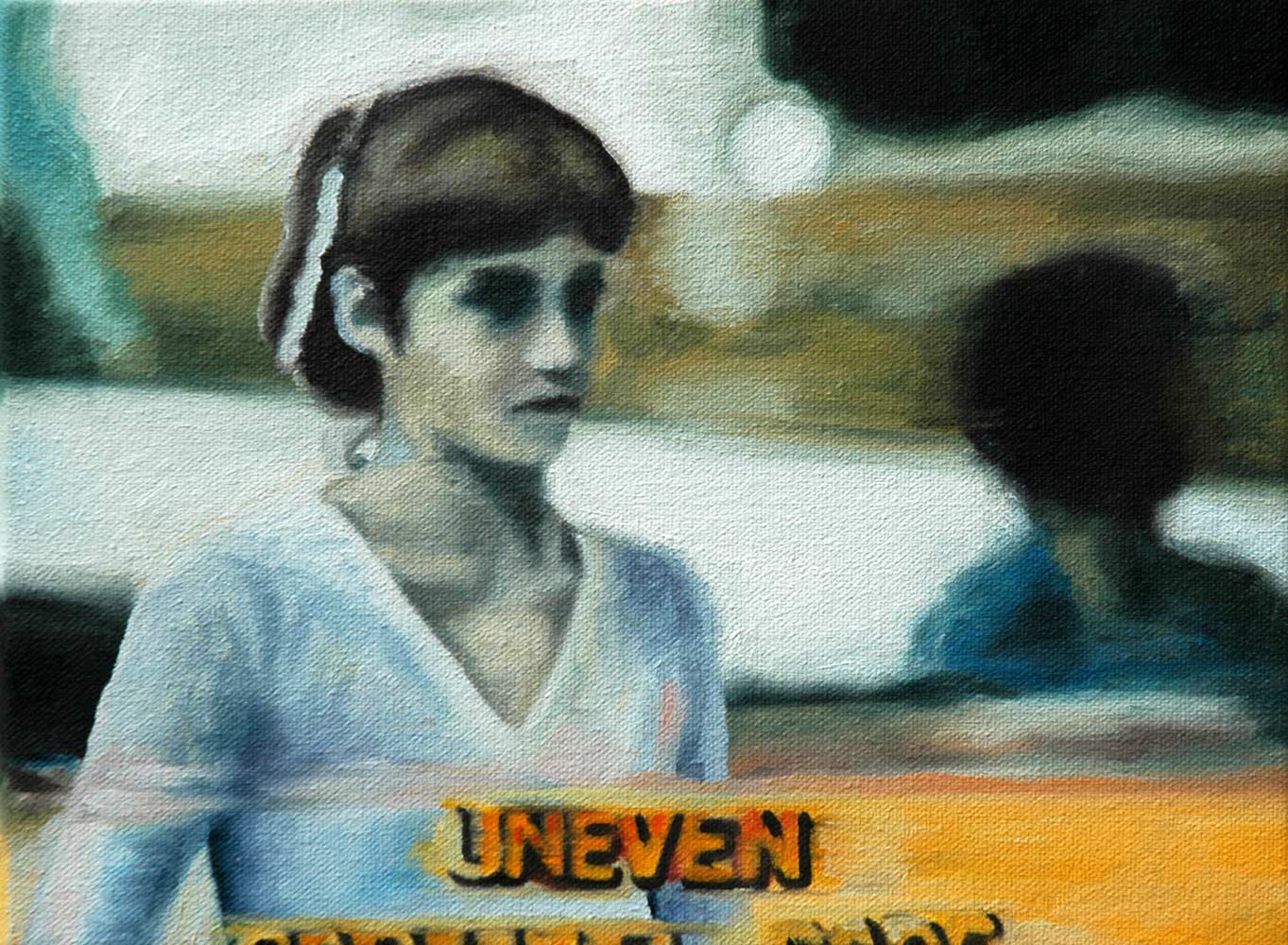
The degraded quality of the source material is significant. Working from repeatedly copied VHS recordings photographed directly from a television screen, Dowse embraced the glitches, distortions, and visual noise that emerged through the process. The resulting figures hover between presence and disappearance. Their bodies remain visible, yet are partially obscured by the very mechanisms through which they have been recorded, transmitted and re-recorded. In this sense, the paintings become not only representations of bodies but meditations on how bodies are seen.
This concern with observation and visibility continued in later projects. During a year-long residency in Derby, Dowse created Constellation, a large installation comprising fifty-four small paintings of faces extracted from video footage she shot while walking through the city centre. The paintings resemble CCTV stills: fleeting, anonymous, and detached from narrative context. Here the face becomes evidence of presence rather than identity. Although each image originates from a specific individual, the process of extraction and translation strips away personal detail, transforming people into fragments of a larger social portrait.
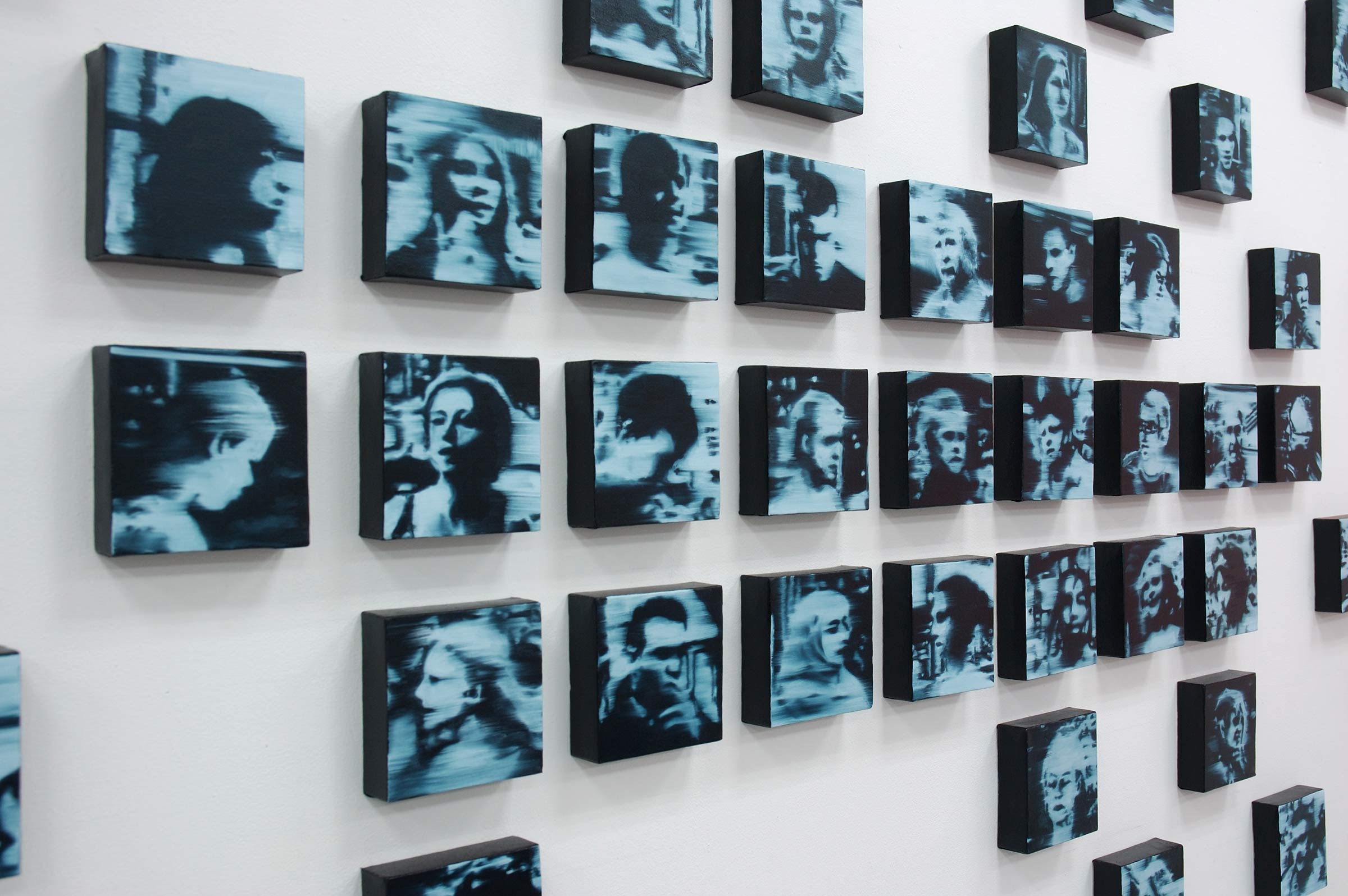
The tension between individuality and anonymity recurs throughout Dowse’s work. Her paintings often focus on people whose identities are inaccessible, whether they are strangers encountered in public space, anonymous figures found in online photographs, or actors isolated from their cinematic narratives. The body remains present, but certainty about who that body belongs to has been deliberately removed.
This approach is particularly evident in works derived from found photography. In the series Between the Lines, Dowse used low-resolution family snapshots sourced from the internet. These images possess an immediate familiarity, resembling the kinds of photographs found in our own albums. Yet the subjects themselves remain entirely unknown. The viewer recognises the gestures, expressions, and situations while simultaneously faced with the impossibility of genuine knowledge. These figures become carriers of projected memory rather than documented biography.
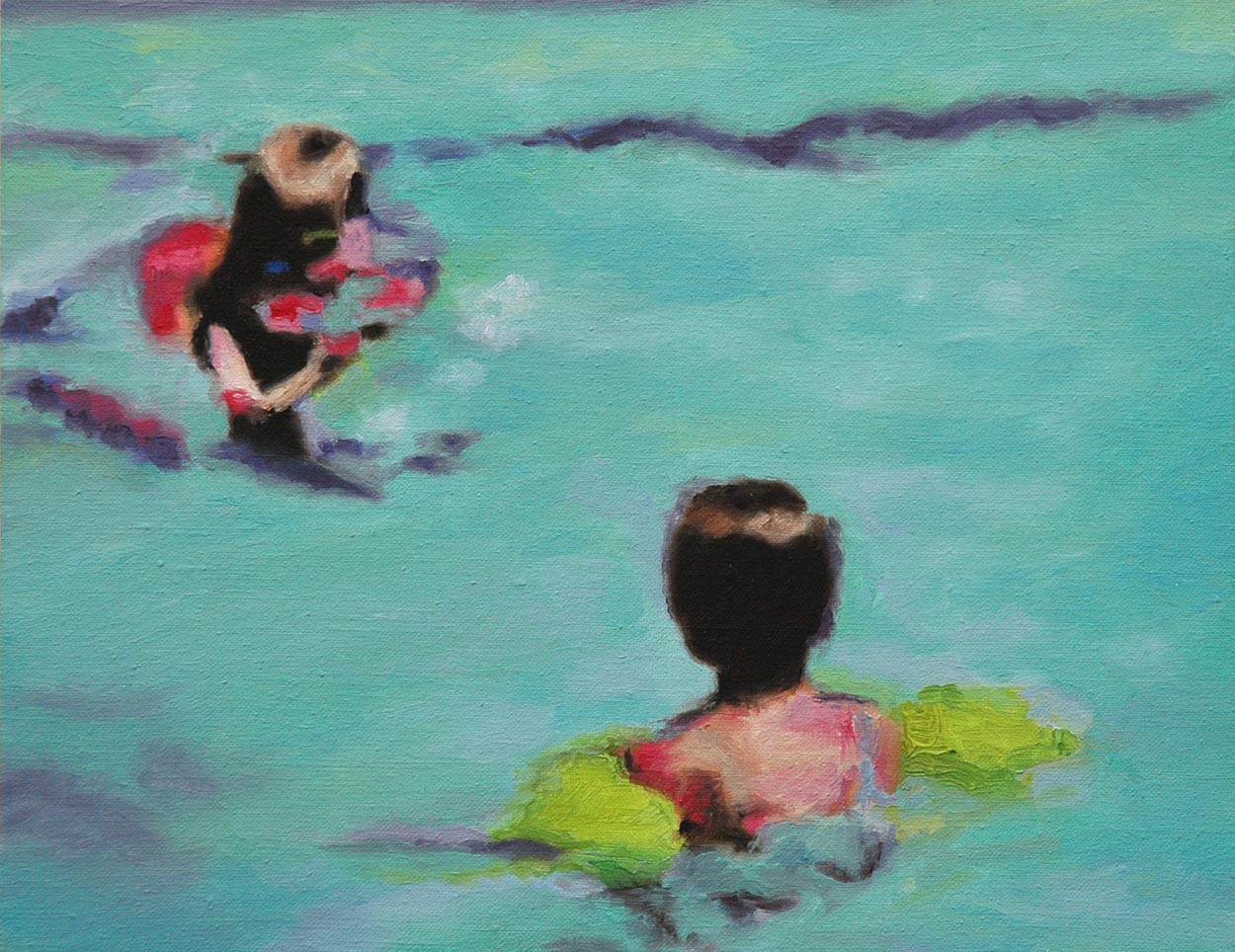
These longstanding interests reach a new level of intensity in Mise en scène, the ongoing body of work that includes the Cut, Crocodile Tears, and Cut Lip series. Started in 2015 and drawing exclusively from film and television, these paintings represent the culmination of Dowse’s fascination with the human face.
In the Cut paintings, she isolates a familiar cinematic trope: the carefully positioned cut on an actor’s cheek used to signify danger, conflict, or survival. She calls it a filmic ‘visual shorthand’, and we understand it immediately. Removed from its original narrative, the wound becomes an object of scrutiny in its own right. The paintings focus on faces, often cropped so tightly that they verge on abstraction. The actor disappears; what remains is skin, flesh, colour, and the painted illusion of injury.
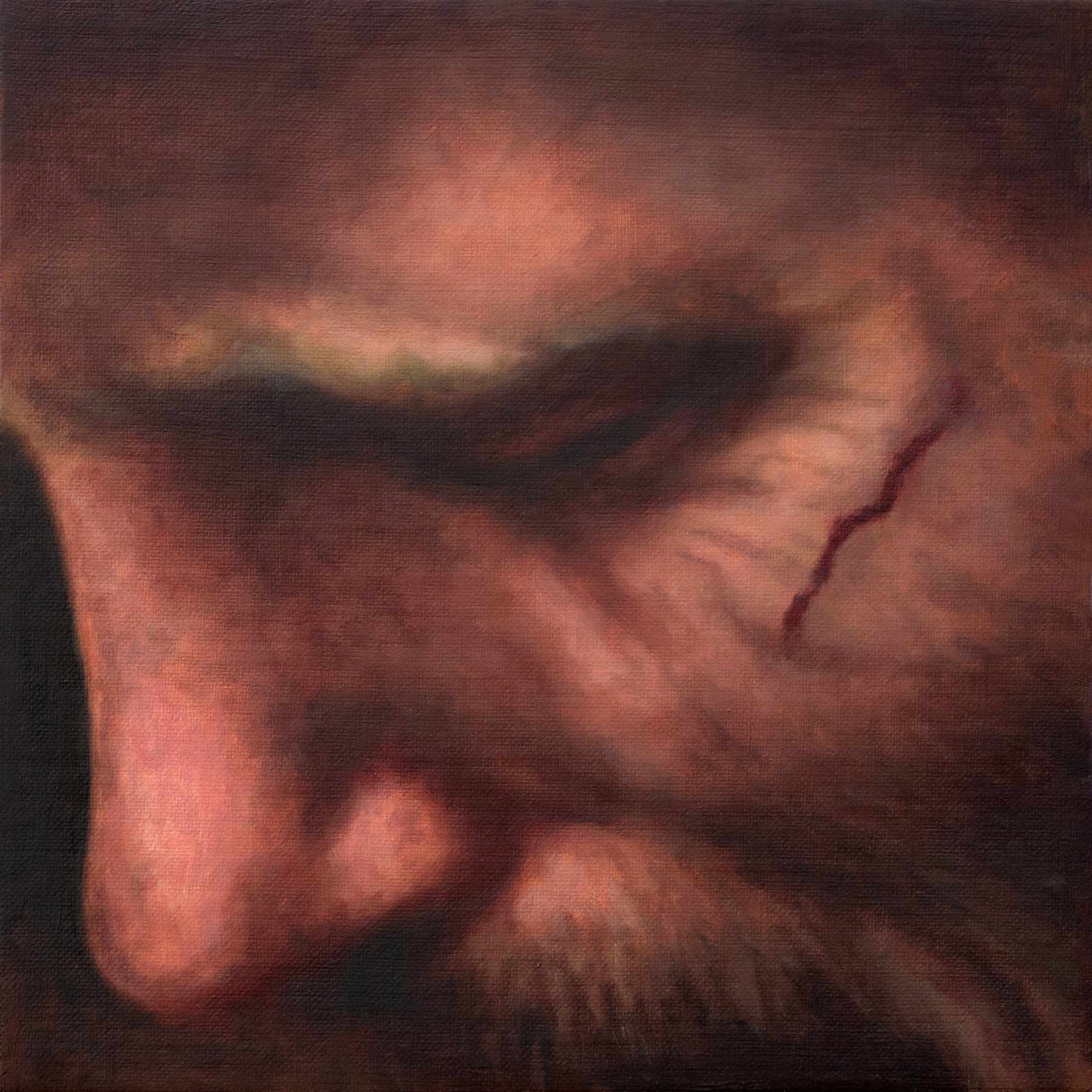
The irony is central to the work. The cut itself is not real, but theatrical make-up – a painted mark depicting a fictional wound. Dowse’s paintings therefore become representations of representations, drawing attention to the layers of artifice through which violence is communicated. However, Dowse’s intervention changes the dynamic; the images gain a visceral physical presence to which we relate. The viewer responds not to narrative but to the body itself.
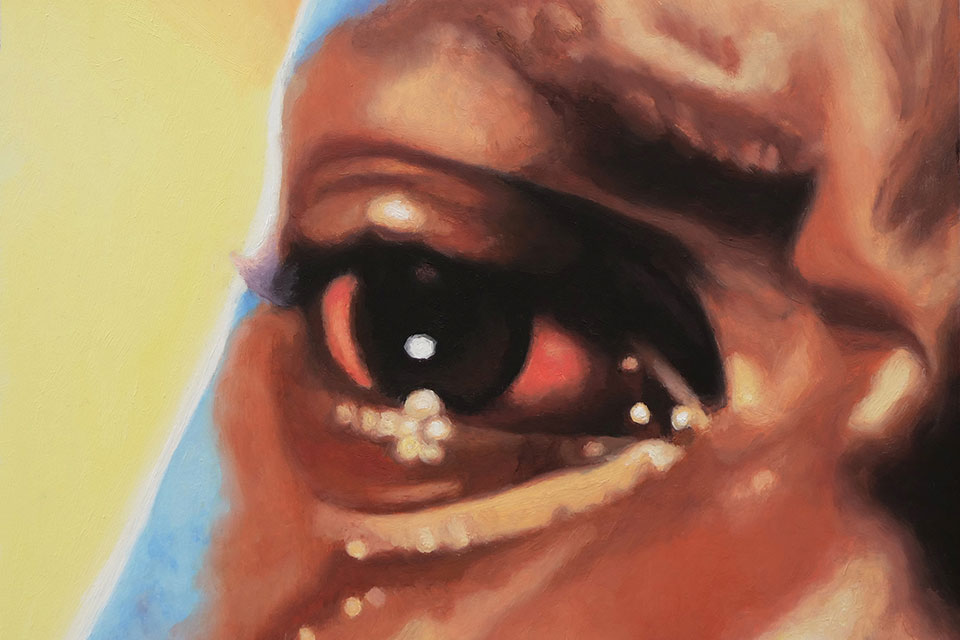
The Crocodile Tears series shifts attention from injury to emotion. Here Dowse isolates moments of cinematic crying, reducing the image to fragments of eyes, cheeks, skin, and tears. Through extreme cropping, she removes the surrounding story entirely. The resulting faces become emotionally charged yet strangely ambiguous. We witness grief, anguish, or despair without knowing its cause.
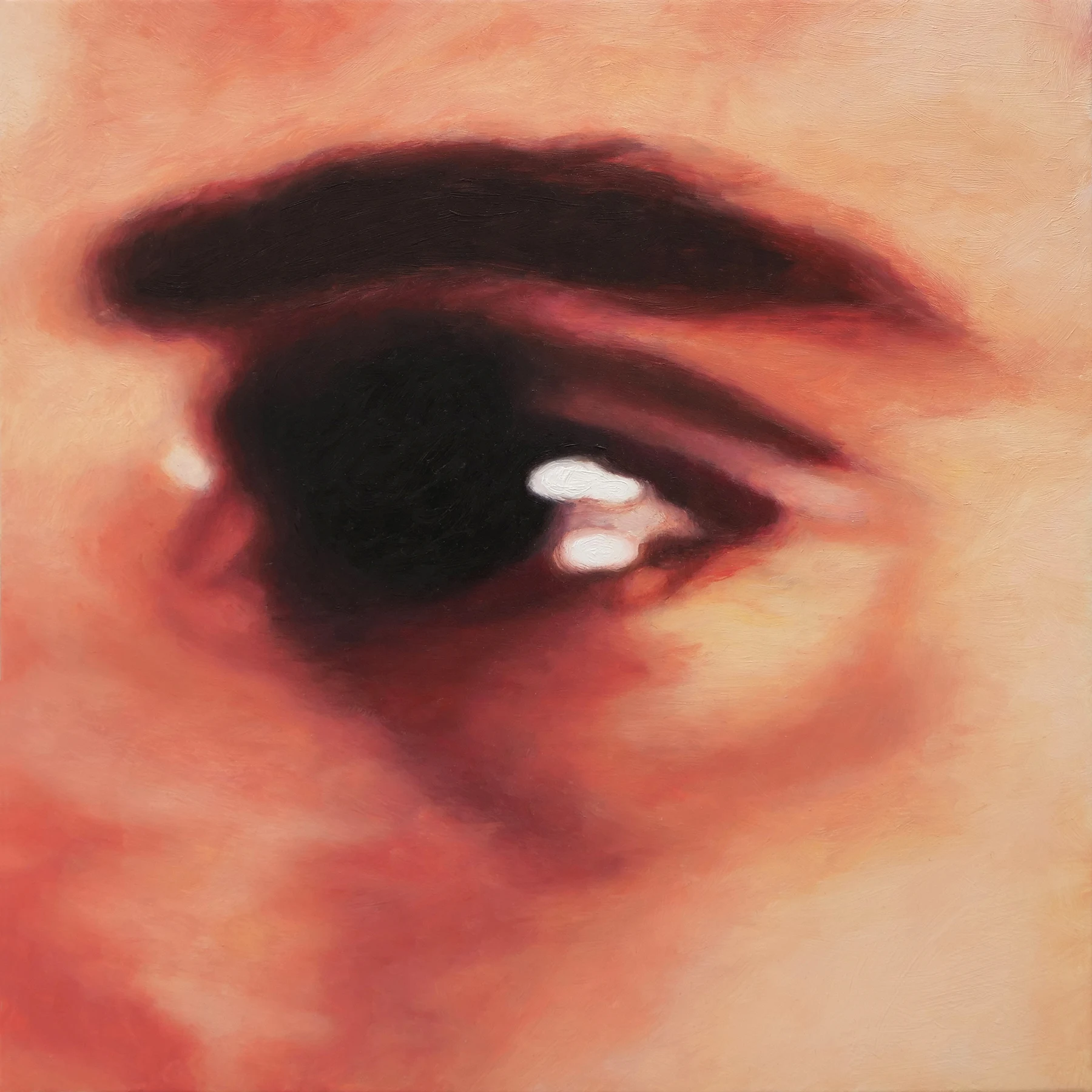
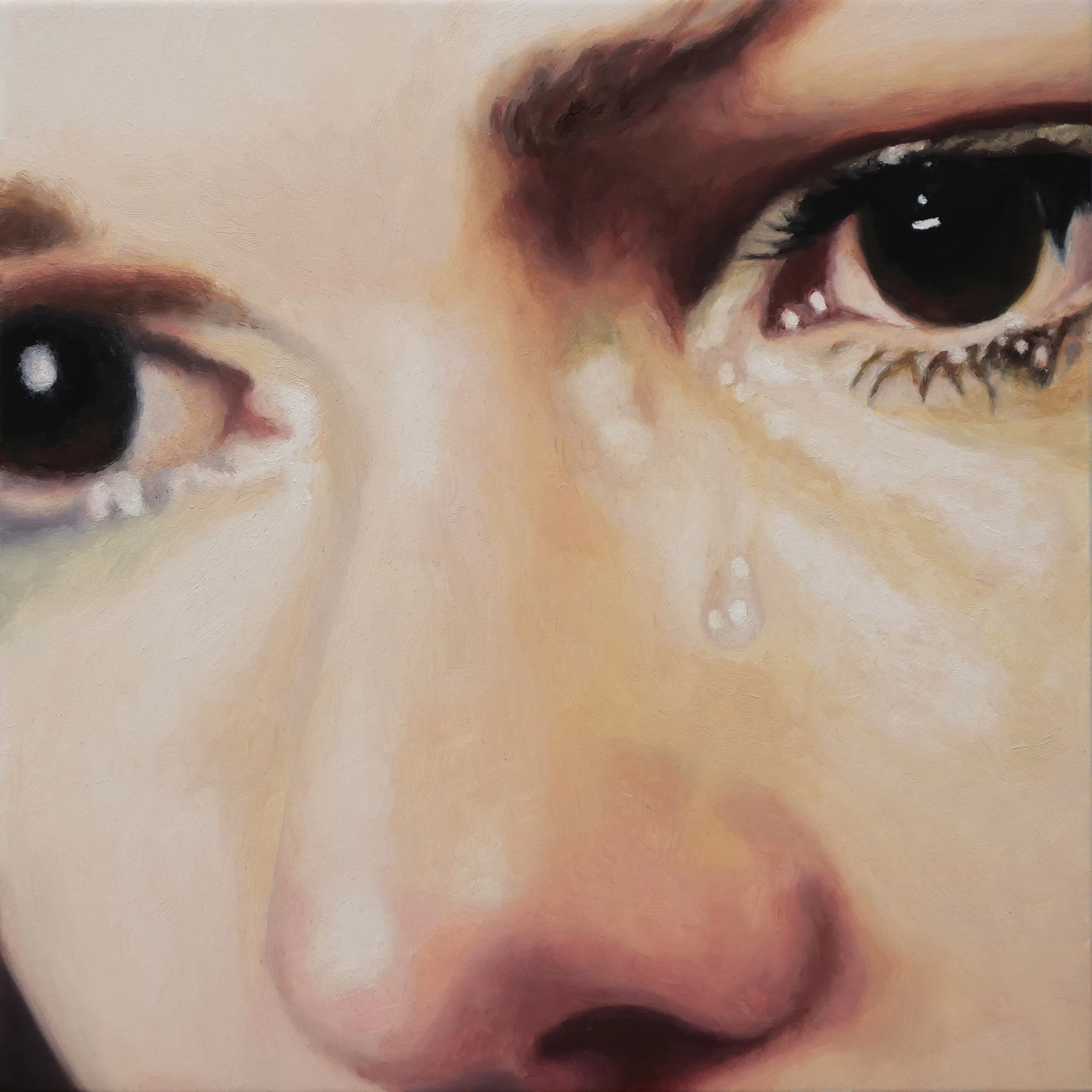
This stripping away of context intensifies the emotional impact. Rather than reading the expression as part of a fictional narrative, viewers encounter it directly, almost physically. The paintings invite close scrutiny of the face as a landscape of feeling. Marks become tears, surfaces become reflections, and paint becomes flesh. In many cases, the resulting images possess an almost devotional quality. Dowse knowingly invokes the historical narratives of religious painting while remaining firmly rooted in contemporary visual culture.
Perhaps the most challenging works within Mise en scène are the Cut Lip paintings. Unlike the broader Cut and Crocodile Tears series, these images focus exclusively on women. Dowse became aware of the frequency with which cinema presents women bearing split lips as signs of violence inflicted by men. Isolated from narrative context, these images reveal the troubling normalisation of such representations.
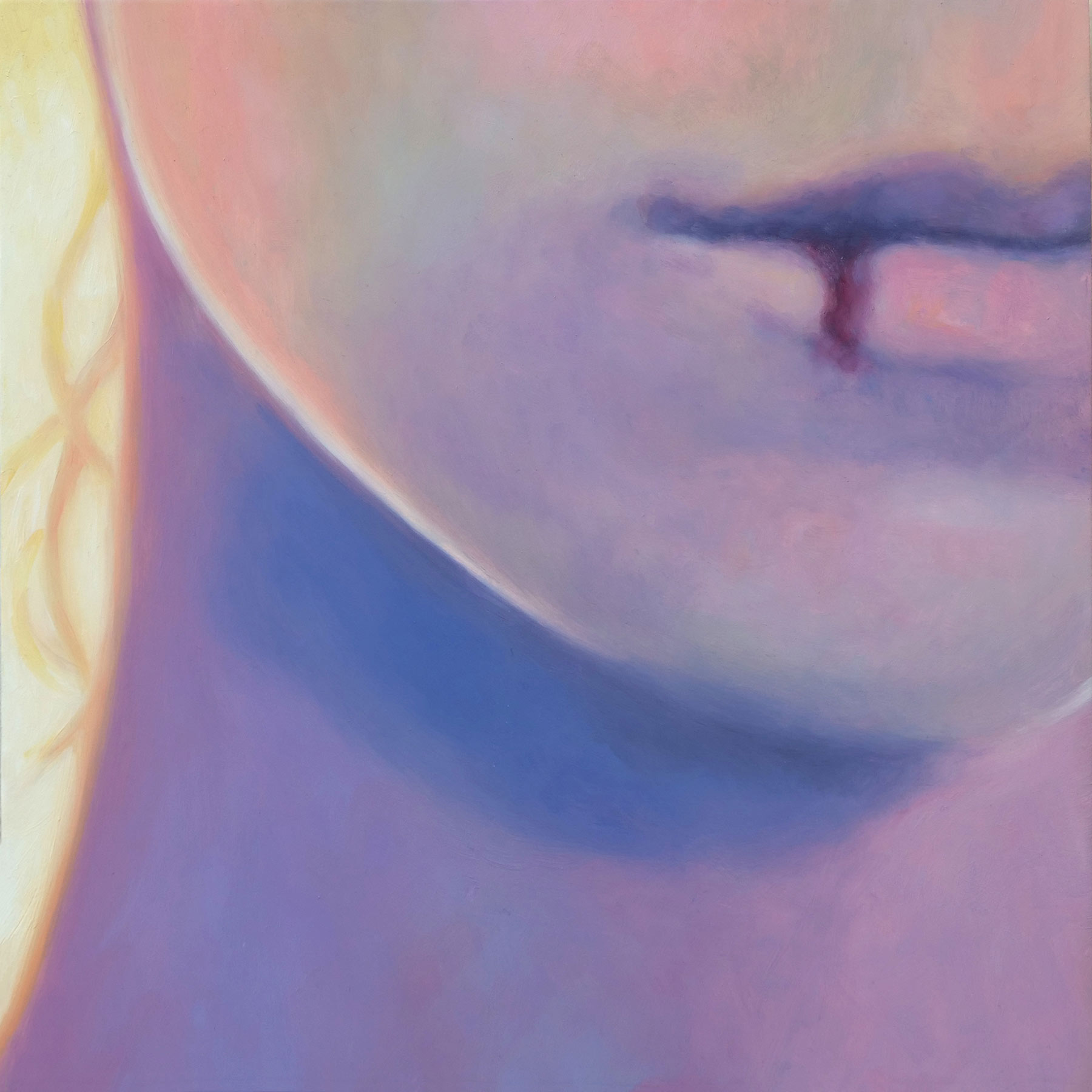
The paintings are uncomfortable precisely because they refuse easy resolution. Beautifully rendered mouths, luminous colour, and carefully constructed surfaces coexist with signs of injury and trauma. The viewer is placed in an uneasy position, caught between aesthetic appreciation and ethical discomfort. Dowse herself acknowledges her ambivalence toward these works, yet it is this tension that gives them their power.
Across all of these projects, the face emerges as Dowse’s most potent subject. It functions simultaneously as portrait, landscape, symbol, and surface. Her paintings rarely seek to describe individual identities. Instead, they investigate what happens when faces are cropped, isolated, degraded, enlarged, or stripped of context. The result is a body of work that examines not only how we see other people but how images shape our understanding of human experience itself.
What links the gymnasts, the anonymous shoppers, the strangers in found photographs, and the actors extracted from cinema is Dowse’s persistent interest in moments of human vulnerability. Whether through physical exertion, surveillance, emotional exposure, or implied violence, her paintings reveal the body as a site of tension between public image and private experience.
By focusing ever more closely on the face, Dowse has arrived at a form of painting that is simultaneously intimate and unsettling. Her subjects are removed from their original narratives, yet they acquire new lives within the image she paints. The body has been a constant throughout her practice, but it is the face – with its capacity to conceal, reveal, perform, and endure – that has become her most compelling territory.