Painting, sculpting and piecing together through motherhood and dysregulated bodies
A conversation between multimedia artist Sarah Gillham and painter Mindy Lee ahead of their two-person exhibition – Sirens.
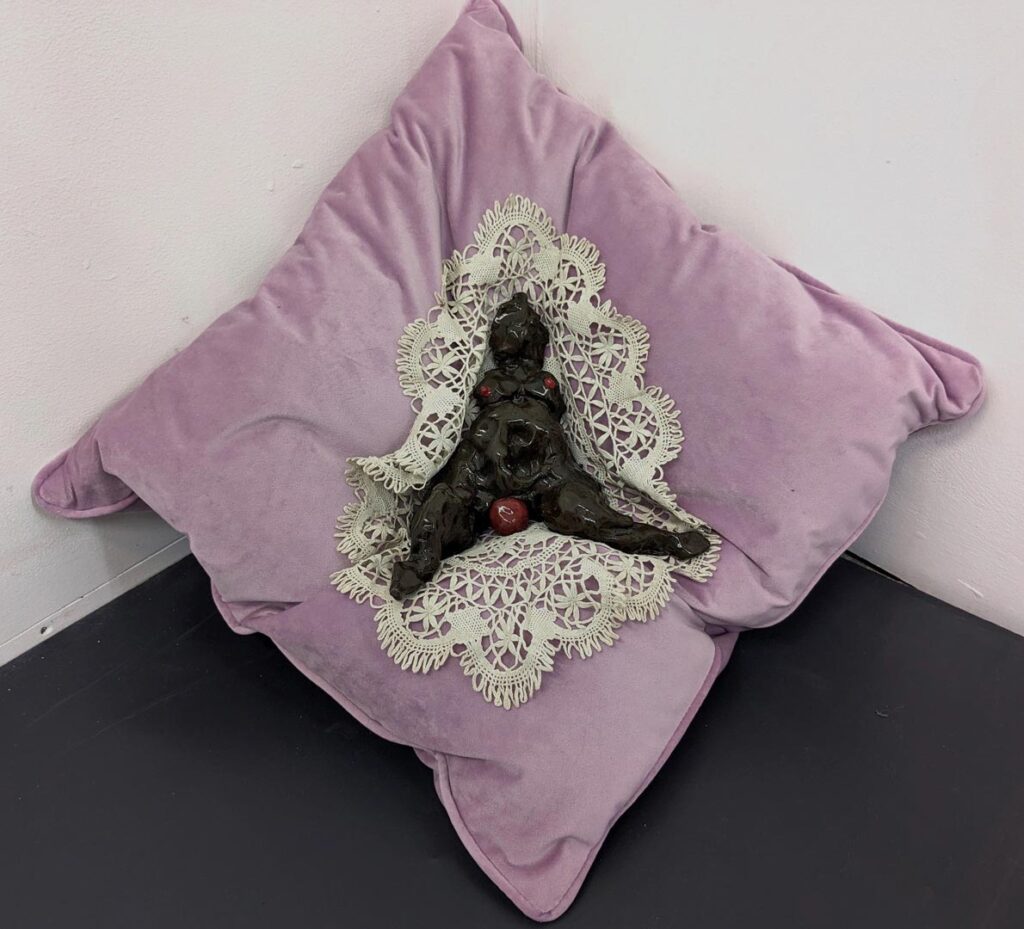
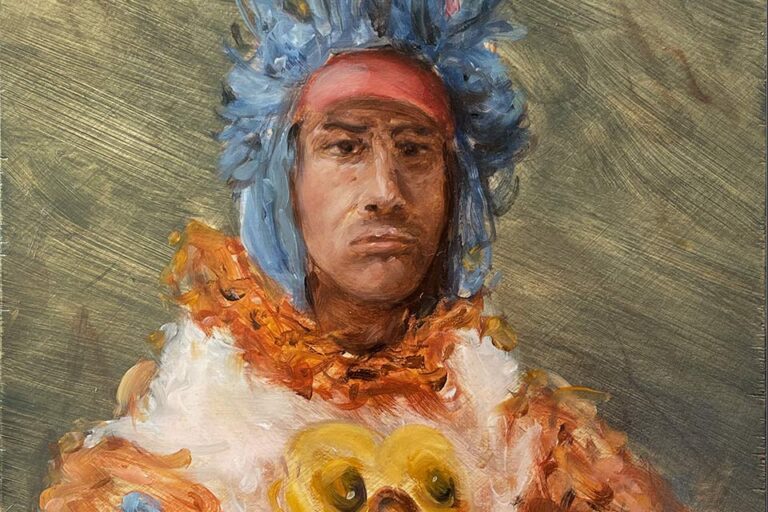
Image credit the artist
Mindy: We have been friends for over 20 years, since studying Painting together at the Royal College of Art.
Sarah: I saw your work and was intrigued, I didn’t quite understand it, and I think that’s what pulled me in.
Mindy: Same. You still pull me in!
Sarah: We both use fragments of the body. I’m drawn to these fragments and figuring out how all these things come together. Your paintings are like a document, but something is missing. You give us half of you, sometimes more. It’s like finding an important piece of paper with somebody’s medical records on but there’s a chunk of it ripped off; I piece the fragments together.
Mindy: This parallels my life: gathering fragments of information, from SEN and medical specialists for my child. I create holistic care and support by making sense and applying this information. Piecing together is also something I am encouraging the viewer to do. I know you need to do this as well for your children.
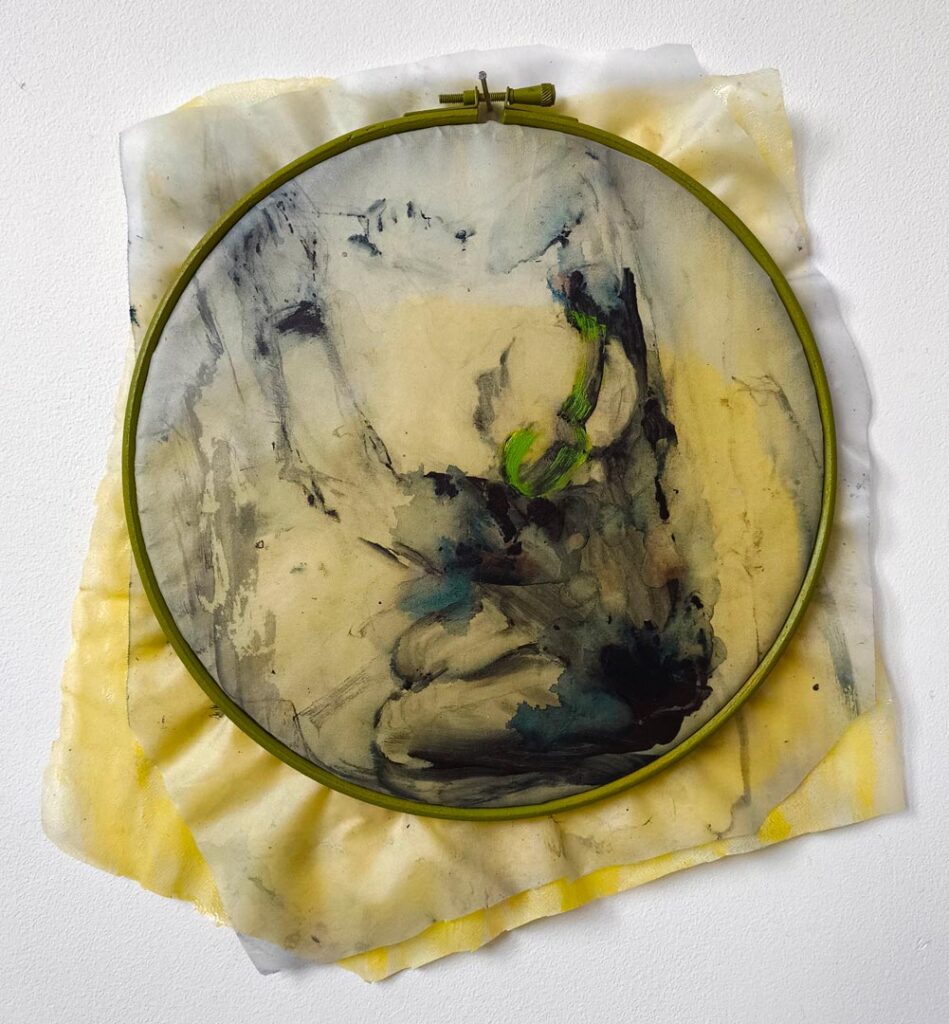
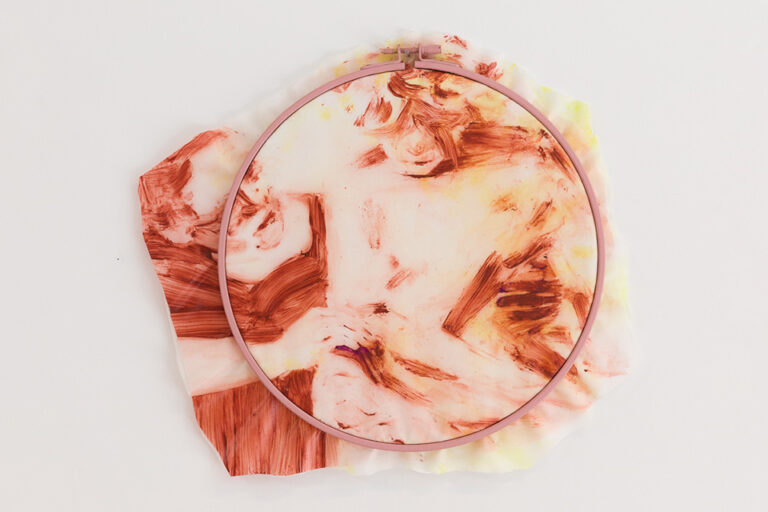
Image credit the artist
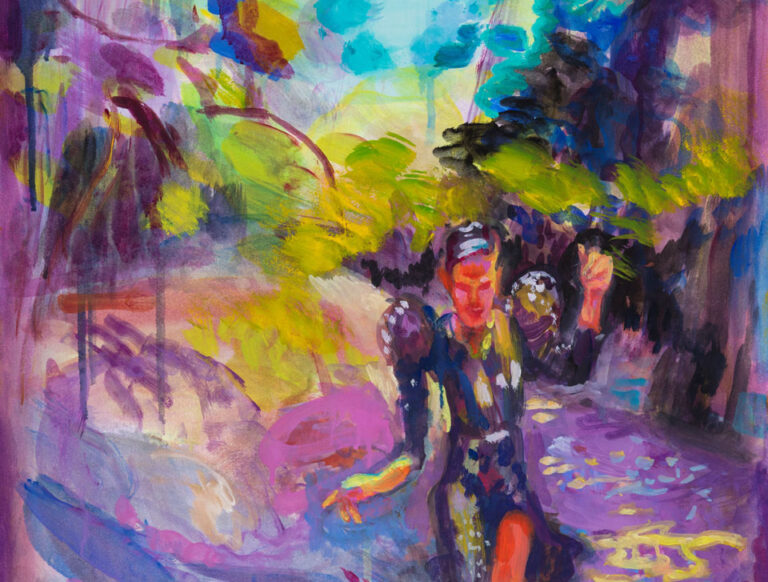
Mindy: I share my family experiences as a mother of a neurodiverse child, but my paintings are not an illustration of my life, more small glimpses into open-ended moments of interaction.
Sarah: How do you go about making a painting? Is it, I must make a painting about that moment!
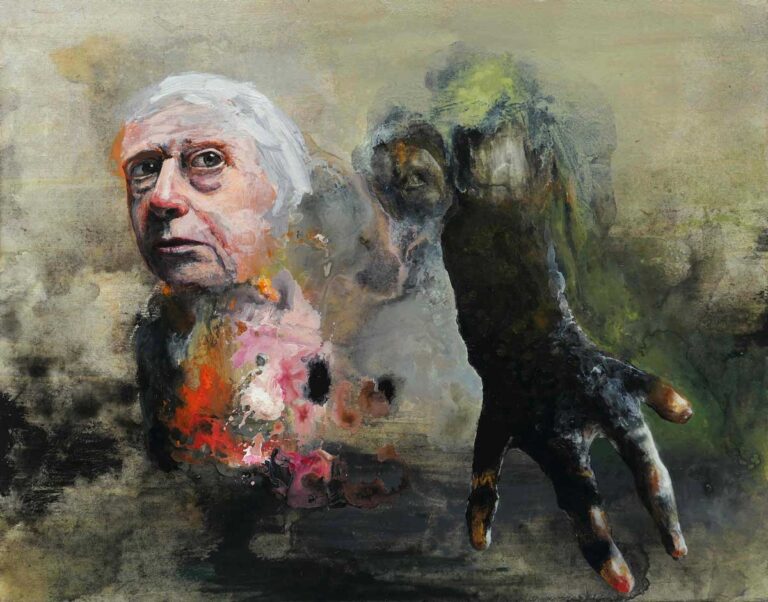
Mindy: Good question – sometimes. I’m often looking for a moment with multiple interpretations…. something that would make you stop and tune in, with an urgency about wanting to understand it, but you need more information. You have to interpret with what you have and find your own narrative.
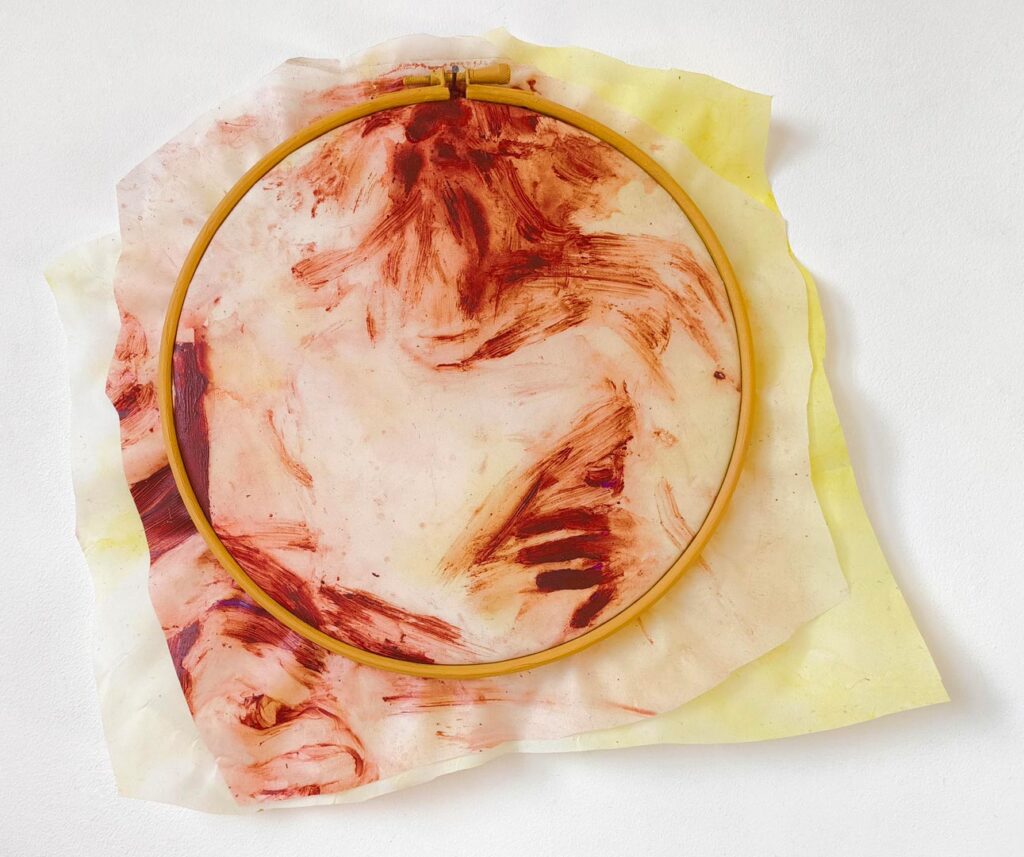
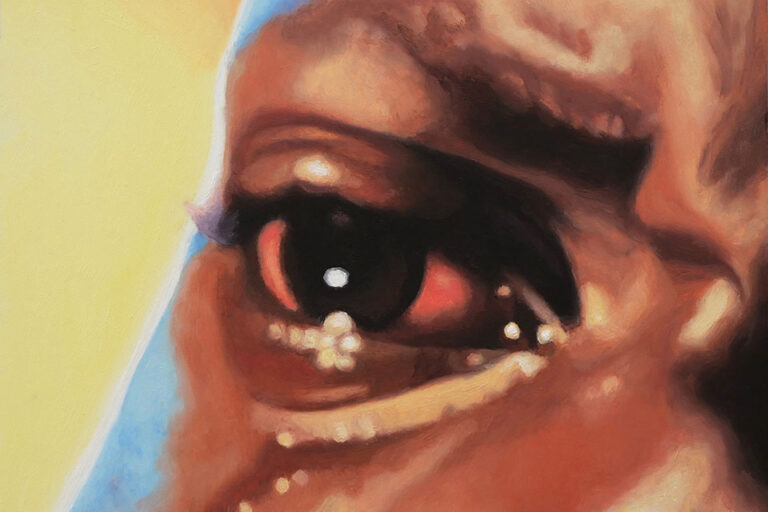
Image credit the artist
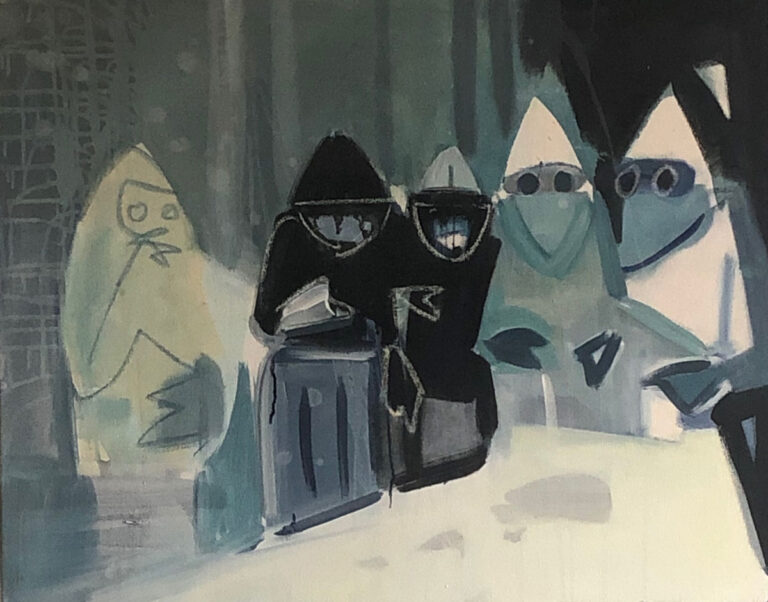
Sarah: I was thinking about shock and its relationship to your paintings. Some artists are there to shock, they’re provocative in a shocking way and they expose a cut. A shock that exists already in the world. What some of your work seems to do, is expose the shock within the viewer, so it reflects onto them about their own anxieties. I think this works because your paintings are fragmented. When you’ve got more of a narrative or domestic scene around an incident then you can see who the accomplices are. So, it’s like a crime scene, right? You know, if you see a picture from a crime scene of hands and some bloody pool or something, and you don’t know what happened, it activates something in the viewer. If you had the whole scene, you might see that the person’s just fallen down the stairs.
Mindy: -or possibly slipped on tomato soup. [both laugh]. I’m enjoying your crime scene reference; I got into true crime through my grandmas’ obsession … You’re right, to make sense of the paintings, you need patience and to bring your experiences to them because they hold back and remain actively unresolved.…This shock happens with your work as well, using broken fragments of historical found objects. When I see them, I think, Oh my God, what happened to her! How did she break? How have you repaired her? Why does she now take on this chimera type hybrid form?
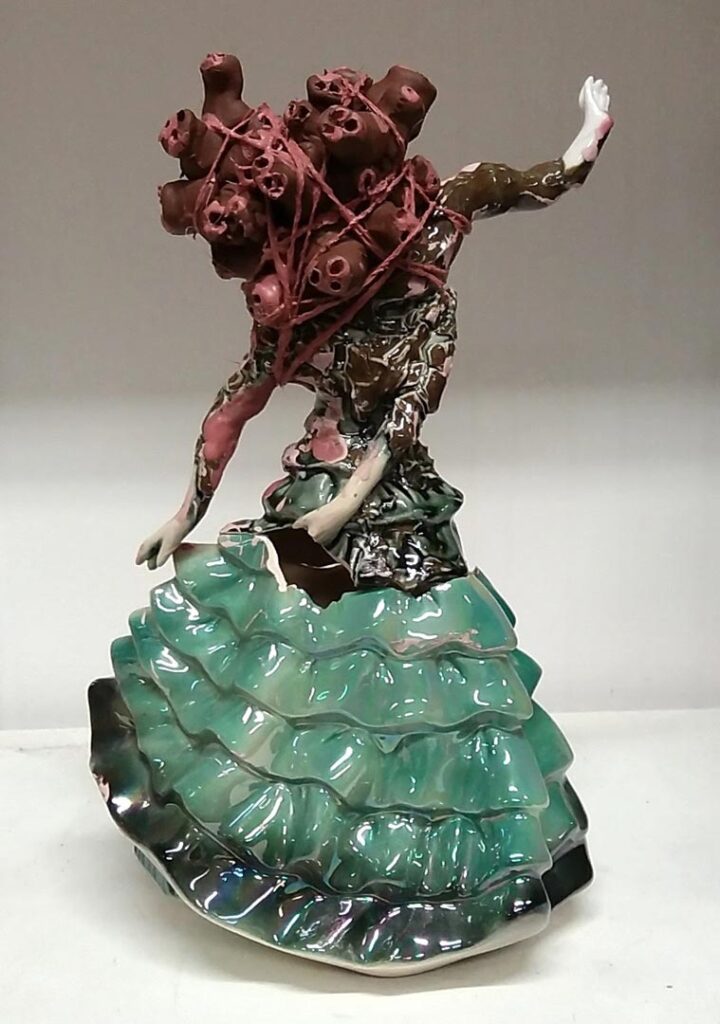
Image credit the artist
Sarah: I think that’s important to me that I am applying my own narrative to something that’s already found and then the viewer is left to unravel and then piece together how this hybrid came into existence.
Mindy: These found objects reference a huge range of historical artefacts, from Ancient female fertility icons to 1950s, and 60s nostalgia, and then into present day. How do you use them with your own personal identity and experiences to-
Sarah: -Integrate-
Mindy: -yeah, to integrate these objects?
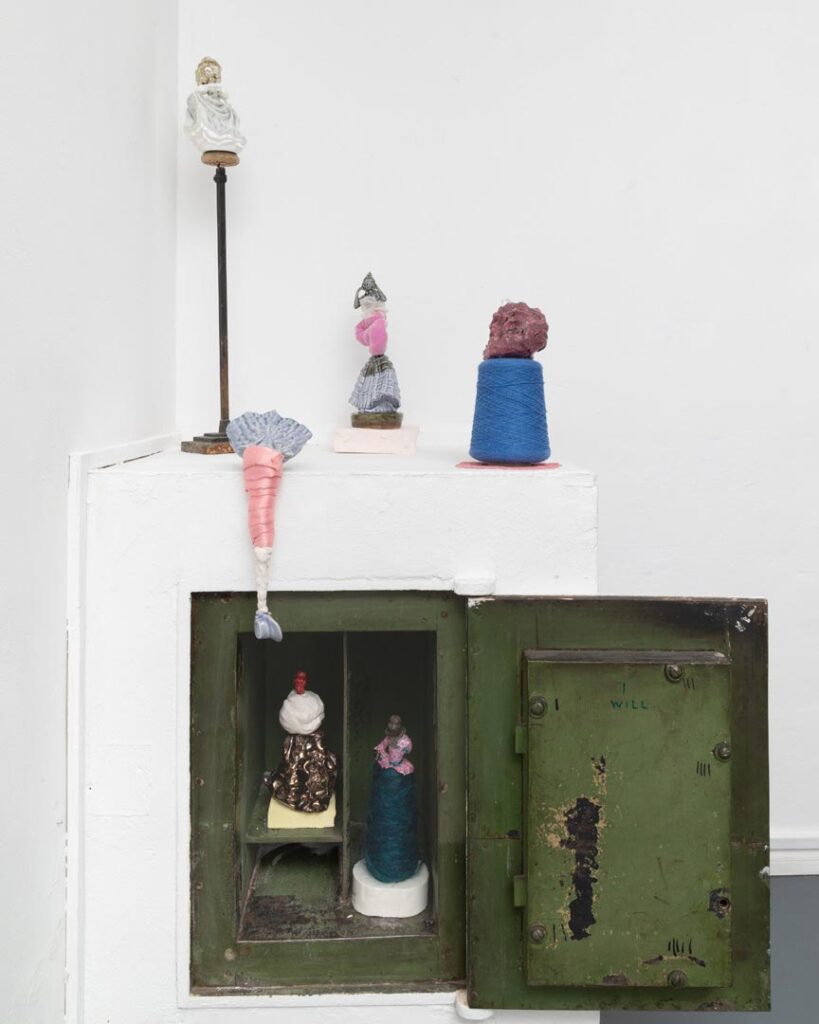
Image credit BJ Deakin Photography
Sarah: It starts off with looking to history to find something that reflects my own body. That’s always been a concern, something of interest to me. When I was young, I used to look at my mum’s body to try and figure out where my body comes from. That’s how it started. I was shown Royal Dalton figurines by my mum who as an antique dealer and I was thinking well, that’s what a feminine body looks like. But then I also looked at my posters of Kylie Minogue and her body. So, I think it’s always been about a search, like a reflection of myself within the history of women’s bodies.
At college, I became quite obsessed with images of Kate Winslet, when she was in Titanic. The media really tore her body to pieces. I made a series of paintings about her body. I felt at the time, her body reflected my body more than the status quo and the early 90’s heroin chic looks of Kate Moss -a super skinniness, which I was very far away from. Kate Winslet or the Venus of Willendorf, it’s the same kind of sensation of searching to find my place within the history of Art.
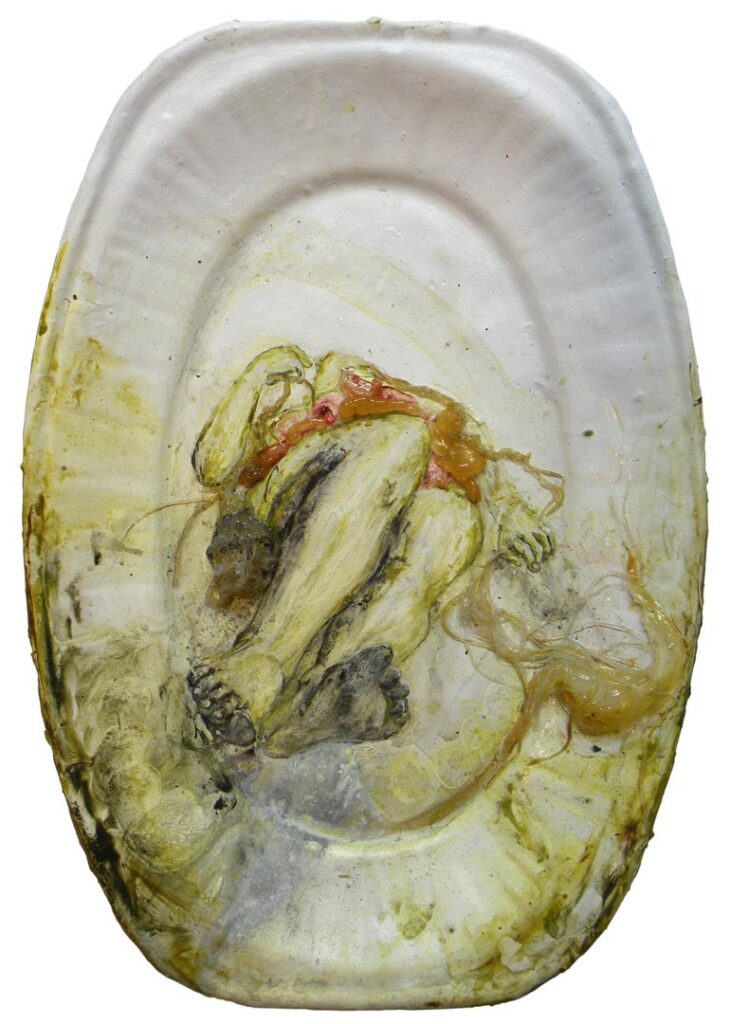
Image credit the artist
Mindy: I’ve worked with historical figures in a similar way. When I was being probed about my infertility, I started thinking about Anatomical Venus models, medically and sensually. It felt like a similar situation, and I created a series of paintings around this idea…. I just wanted to go back to what you said about the press tearing Kate Winslett into pieces. That really reflects in your process!
Sarah: Yeah, that’s true, about wanting to somehow fix something that’s been broken, to reanimate it. I’ve always thought about my female gaze on another woman’s body, it reclaims or restores it.
Mindy: Over the years, my work has moved to using autobiography more directly. Weirdly that loss of individual identity through motherhood allowed my practise to come back to my own off centred, immediate bodily experience. I began making paintings adapting around my sons’ painterly marks. How has your relationship with the body changed?
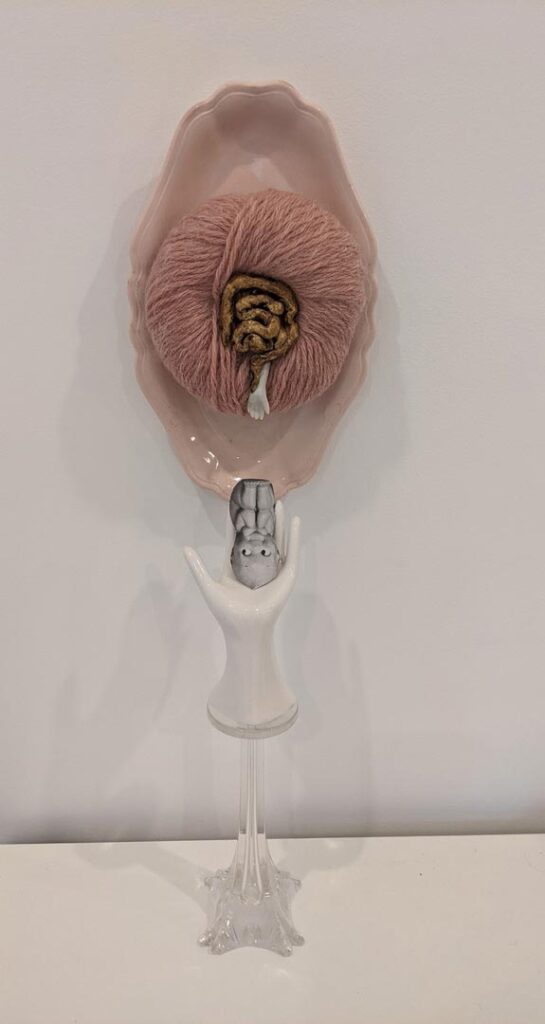
Image credit the artist
Sarah: It’s moved from a sexualized position to more of a mothering position – that’s just to do with where I am in my life. There’s also a shifting relationship to my children. I am currently thinking about mine and my daughter’s bodies splitting in some ways.
When I was in my 20’s and 30’s I wanted to expose traumatic experiences that I had when I was younger, to reclaim and repair the sexuality that exists within the body and to make it good for myself and my artwork. It was about reparation and liberation, but also about pain. When I looked at Kate Winslet’s pain, I was thinking about my own pain. Then, as I’ve got older, I’ve become more at peace with that element of myself.
Sharing the body when pregnant and having neurodiverse children who break its boundaries, wanting to push, pull pinch and kick your body. Or they want to get back inside you. It’s like a violation in a way, but it comes with love and nurturing and not having the right communication skills to be able to tell you what exactly they want and need. There is a layer of grief that holds and manifests itself within the body. Then the maternal body carries loss.
But also, you have the body of somebody who’s died, like my Dad. My lips remind me of his lips…it’s complicated stuff which I think is in your work too. I thought about your work and loss. Since you’ve lost your parents, your paintings have become so much more intentional and immediate.
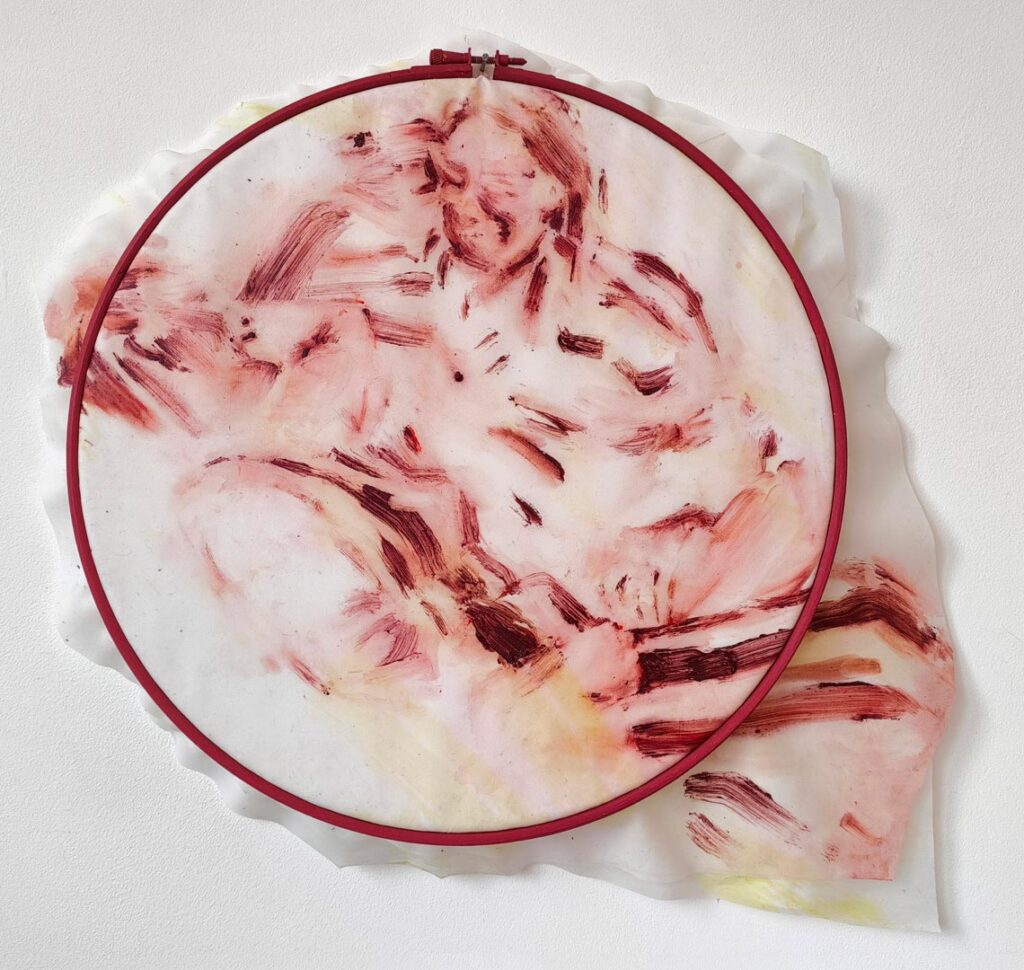
Image credit the artist
Mindy: I really needed to revisit some precious everyday moments with my mum through painting. After she died, I painted a foot and was asked if it was mine or my mums. I said yes. It’s what my mums foot used to be and what my foot will become. There isn’t a boundary between our bodies in that way. It’s intergenerational and interchangeable. There’s a strong family resemblance between the Lees. We can easily be stand-ins for each other within different family roles, e.g. maternal care.
Not painting everything to leave absence has become much more significant through grief, but also in response to my son’s audio processing challenges. When I clarified and simplified how I speak with him, I also intuitively reduced my painting language. Instead of thinking what can I add to make this painting better, I think how much space am I going to risk losing before it becomes overloaded?
Sarah: Why are the nuts and bolts not in the painting?
Mindy: I’ve edited out a big section of painting, down to just the bare bones. I’ve taken away the fleshing out part. As soon as the idea becomes somewhat visible, when I would begin to elaborate- I stop, then make the last few focusing gestures. If I try too hard, or for too long to describe it, it fails. I need to communicate the vital parts briefly. A bit like I have 30 seconds to say something important to you before you catch your train, instead of trying to impress you with a story over dinner.
Sarah: You edit it back, so it becomes less [visually] overwhelming, but the tension is solidified?
Mindy: That’s it.
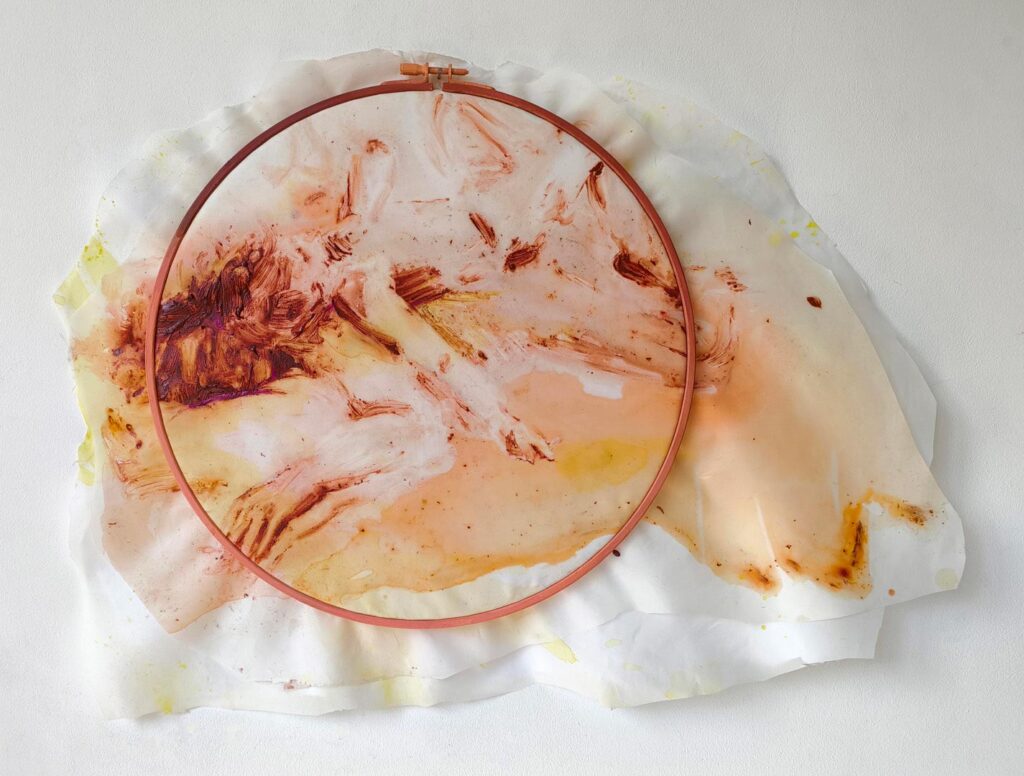
Image credit the artist
Mindy: Can I to talk to you about Sabotage? When I look at your work, you instigate sabotage. Would you agree?
Sarah: Yes, that’s true. I think there’s quite a level of enjoyment in sabotage. That the destructive behaviour is, quite intentional, and it’s exciting to sabotage something. Allowing yourself to do that is important- to allow yourself to become, sort of, dysregulated. To lose control, in order to build something back up and make it whole again and true. Sabotage is a bit like becoming dysregulated.
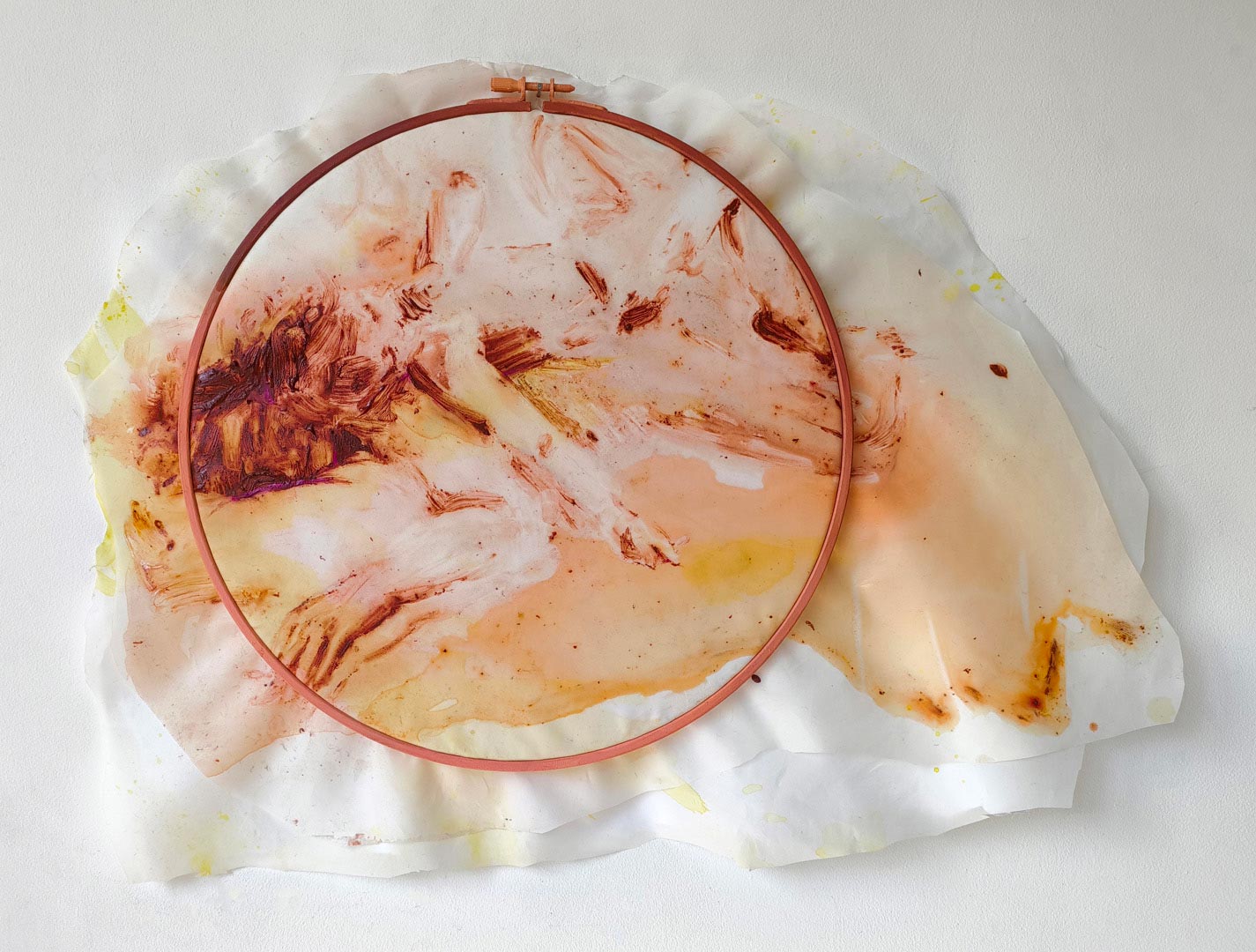
Mindy: Being dysregulated is a really good way to explain it! I learn through drawings, to let it go in painting. Painting is the exciting dysregulating part. I sabotage the surface to lose some control, by working wet into wet with acrylic paint (made from a random combination of pigments.) It slides around and splits in unexpected ways. I’ve sabotaged my timeframe to a few hours at most, so when the paint starts to become sticky and stops moving around, I stop. The process becomes very guttural and instinctive I don’t know how it’s going to play out. If it doesn’t work out for whatever reason, I attempt it again on another piece of silk.
The viewer only sees a tiny fraction of the making. Thinking of the Titanic, all my previous approaches are lost under the sealine, with just the tip of the iceberg visibly sticking out. It’s like when I try to talk to my son, I sometimes, repeat myself 6 or 7 times. I hold the 7 attempts, but my son has only heard it once.
Sarah: A bit of our creative process is dysregulated. When I’m breaking something up and then wrapping it with some scrim, or adding bits of clay to it, which feel bodily and squeezy and sensational, I feel invigorated by the process of using these materials. Like, the way that you feel about paint.
Mindy: Exactly!
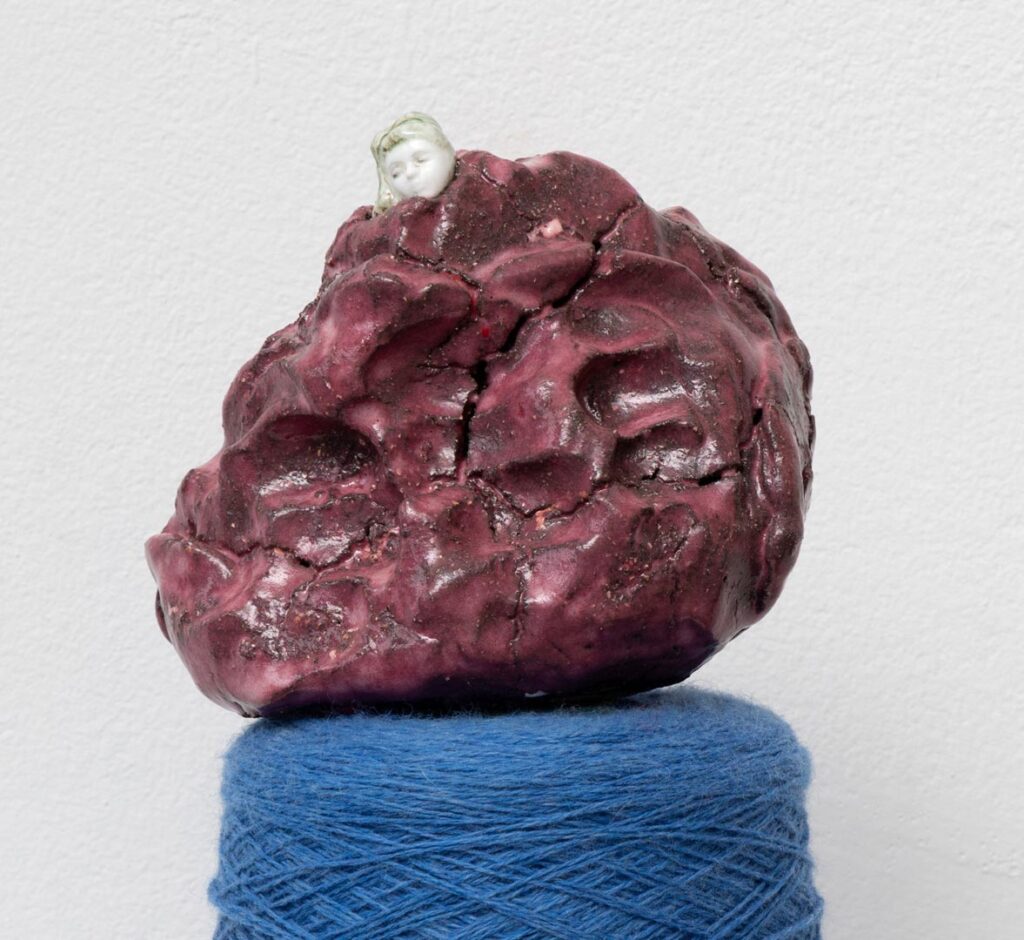
Sarah: Theres a playful sabotage dance going on between material process and a subject. And then there’s the finishing, where you put it all together and it turns into a complete art object. Maybe that’s what the hoop does for you, it frames and seals it, bringing it back to the real?
Mindy: The hoop and the cutting away of excess silk. There is a potential to reconfigure component parts in both our works. It could be a temporary bringing together of layers.
Sarah: Yes, for a brief moment.
Mindy: Also, your work doesn’t complete until it’s found a base.
Sarah: Very true!
Mindy: That’s what brings it into focus. In Sitting Pretty, the bronze woman needed a soft base to reveal her true weight.
Sarah: That is true, we feel her weight.
Mindy: I think your object’s claim their support.
Sarah: And the support becomes part of the object?
Mindy: Yes!
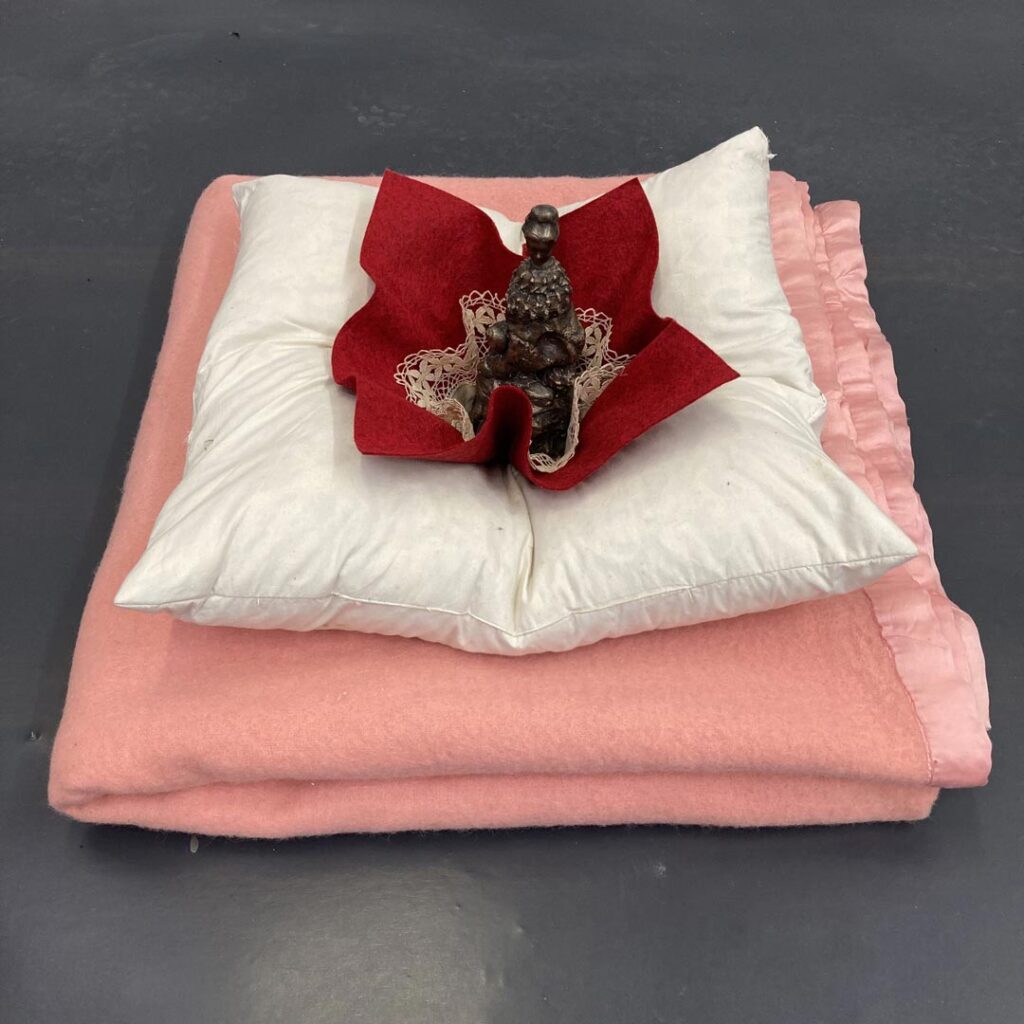
Image credit the artist
Mindy: We have titled our exhibition Sirens; can you share their appeal?
Sarah: They’re dangerous but beautiful, and they come to us through popular culture as much as mythology. There’s something of the child in them – I am thinking of The Little Mermaid – that moment when a girl begins to cross into womanhood. The Siren lures sailors to their death, but beneath the violence is the journey of femininity, really, or womanhood, with all its complexity. A woman has the potential to take a life as well as give life.
Mindy: Also they are only half understood, half woman and half something else. Their song is incredibly seductive and fatal. Is it a beautiful gift or a warning to stay away? A serenade to your grave? I wondered why they sing? Are they lonely, or do they want to eat you, or both? I looked it up and one interpretation was they are cursed. If they don’t kill, they’ll be destroyed, so is it a self-survival strategy?
Sarah: The mystery around communication! This is what you’re doing all the time, every day, thinking, why, why are you [my childen] doing that? It’s just like the sirens singing their death song, ‘I’ve just noticed this, but you seem to be killing people, should we try and unpack that!’ (Both laugh)
Mindy: I can’t help myself! – it shows how making art is not a separate pursuit.
Sarah: Like taking time out to go for a run?
Mindy: Yes. (Both laugh)
Sarah: No, it is NOT separate. Our art definitely comes from our lives.
Sirens
Sarah Gillham & Mindy Lee
231 London Road Gallery
St Leonards-on-Sea
https://www.instagram.com/231londonroad/
November 2026