CBP Prize 2026 shortlist
Congratulations to the shortlisted artists
We are thrilled to announce the artists for the Contemporary British Painting Prize 2026. The 15 shortlisted artists are:
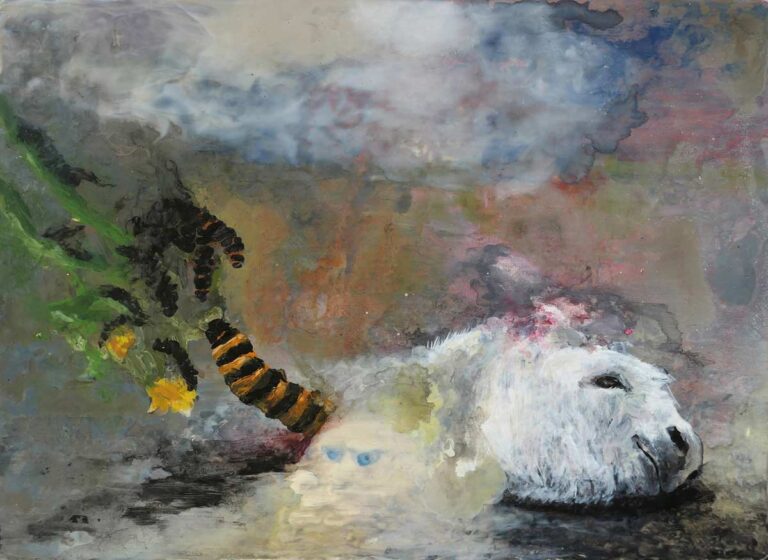
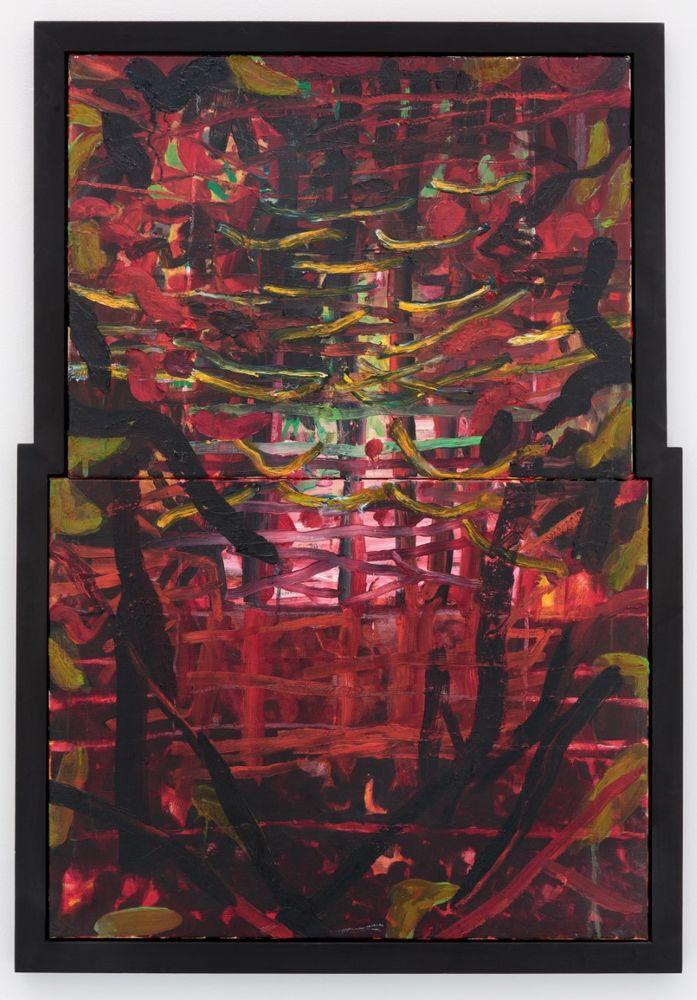
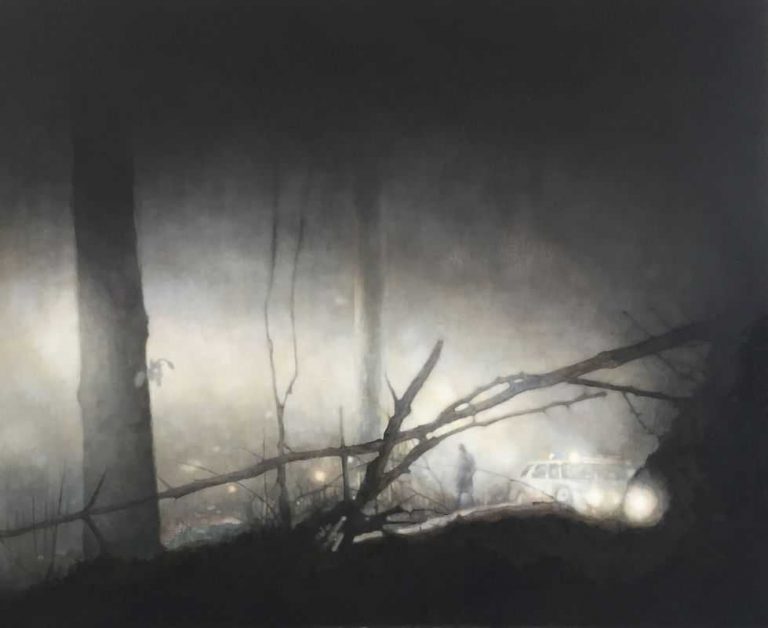
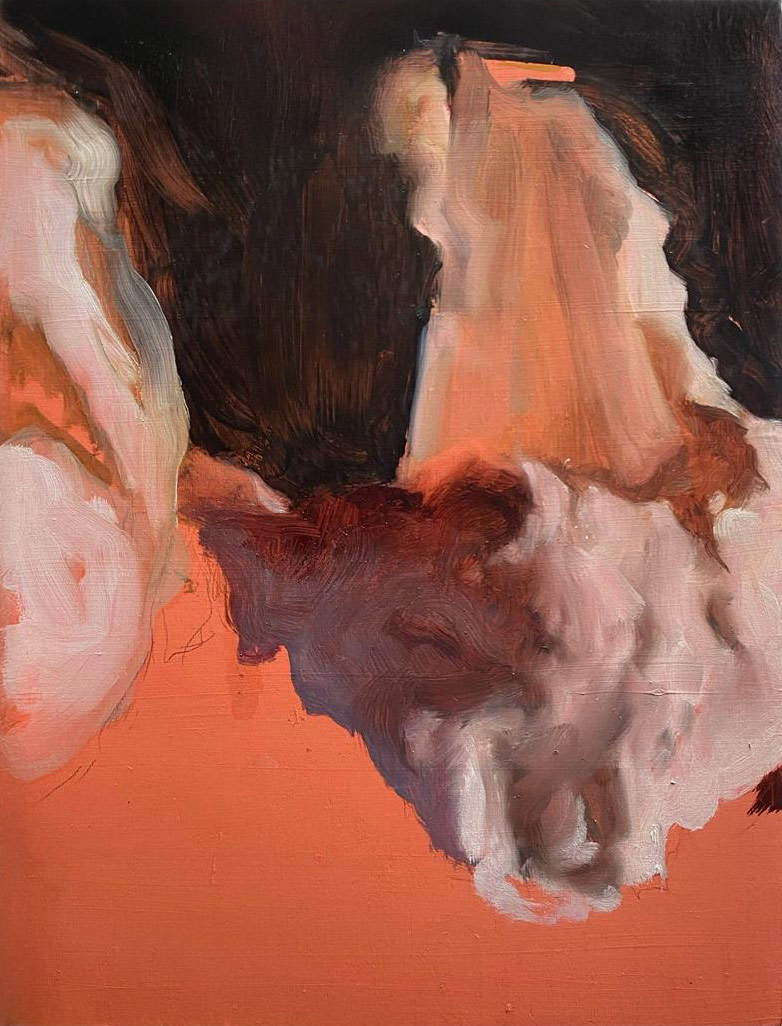
Andrew Bryant | Christopher Cook | Gwen Evans | Pippa Gatty | Mathew Gibson | Caroline Gorick | Melanie Guatelli | Christopher Hanlon | Jinyong Park | Ben Sadler | Katy Shepherd | Robert Sherratt | Michelle Ussher | Haijie Wang | Kate Wilson
Image: Caroline Gorick, Suspend, Oil on board, 2024 (detail)
Notes on selection: Iain Andrews
Yesterday I had the privilege of selecting for the Contemporary British Painting Prize, along with the three other selectors: Daniel Bell (the 2024 prize winner); Rachel Lancaster; and Emma Tod. An early start and a strong coffee, followed by a three hour train journey to Newcastle, saw the four of us, ably assisted and monitored by Narbi Price (Chair of CBP), meeting in a university seminar room to go through the longlist.
Gordon Dalton, a previous selector, has already written eloquently about his take on the selection process, but on the basis that confession is good for the soul, I wanted to share a few thoughts on this year’s procedure, and thus expurgate the guilt of presuming to differentiate from such a strong body of paintings.
When I undertook this, I knew I should keep in mind all those times I had received the dreaded email myself – the one that opens with something like ‘We would like to thank you for entering, but…’ and goes on to cite the volume of entries, etcetera, etcetera. Perhaps there are artists who can shrug off rejection as easily as they might brush away biscuit crumbs, but, although it’s become easier as I’ve grown older (the first rejection feels savage, hundreds stop hurting quite so much as you numb up), it’s a huge responsibility to be sitting on this side of the process.
Having judged other prizes I had some inkling of what to expect, and Narbi had pre-warned us that the final hour could get very heated; personal opinions and a desire to understand just why your fellow selectors can’t recognise the brilliant use of colour and visionary quality in that particular painting could create a fractious atmosphere. From the start there were painters who stood out, but not a single one that all four of us agreed on. This highlights the importance of remembering that the process is incredibly subjective, and although it’s an oft repeated cliché, different sets of eyes on a different day could make a very different set of decisions.
Artists rarely work by committee, and making a painting is never a democratic process in which others are asked, for example, to vote on whether you should use naples yellow or cadmium yellow for a particular passage. Of course you acquire technique, knowledge and understanding, but the painterly decisions you make in front of the canvas are yours alone. This is vastly different to sitting with three other people and voting on whether a particular painting is a Yes, a No, or a Maybe (in reality a Maybe equals No in almost every case).
It took us 6 long hours to whittle the 57 down to 15, and at the end I felt both grateful that some of my top choices had made it and frustrated that others hadn’t, which I guess is always the case when a compromise of any sort is made. There were painters missing from the list whose work I adored, but whose work simply didn’t resonate with the other selectors or perhaps had made a submission that didn’t present their practice in the most consistent way. The vast majority of the work was very strong and backed up by well written statements, meaning that at the end, it simply came down to our opinions.
To those who didn’t make it, either into the longlist or the final show, I would say ‘please try again next time’, because with a different set of selectors you’re going to have a completely fresh chance. There’s a paper-thin line between being in that final list and not, and one day you also may find yourself sitting on the other side of the equation – at which point recalling your own experiences will hopefully add a degree of gravity and thoughtfulness to the choices you make.
I’ll end with a big thank you to my fellow selectors for their time and patience, and recount some sage advice from the Canadian playwright Raymond Hull: ‘He who trims himself to suit everyone will soon whittle himself away’. It’s important to keep hold of that, especially amidst the flurry of ups and downs you inevitably experience when you’re having the courage to put yourself out there and share your vision with the world.